How Can Lightweight Carbon Fibre Rims Improve Your Bike’s Riding Efficiency for Wholesale Buyers?
For a bicycle brand, distributor, or wholesale buyer, choosing a carbon rim is not simply a matter of finding the lowest gram count.
A lightweight rim may look attractive on a specification sheet, but the real commercial question is different:
Can this rim help create a bicycle that rides better, sells better, and delivers reliable performance for the target customer?
This is where lightweight carbon fibre rims become particularly interesting.
Compared with conventional aluminum rims, carbon composite construction gives manufacturers much greater freedom to control rim depth, wall structure, fiber orientation, aerodynamic profile, and overall weight. The result is not just a lighter wheel. When properly engineered, the wheel can contribute to faster acceleration, more responsive climbing, improved aerodynamic efficiency, and a more premium riding experience.
For wholesale buyers, however, performance is only one part of the equation. Product consistency, testing, customization, production capacity, lead time, packaging, and after-sales support all determine whether a wheel program is commercially successful.
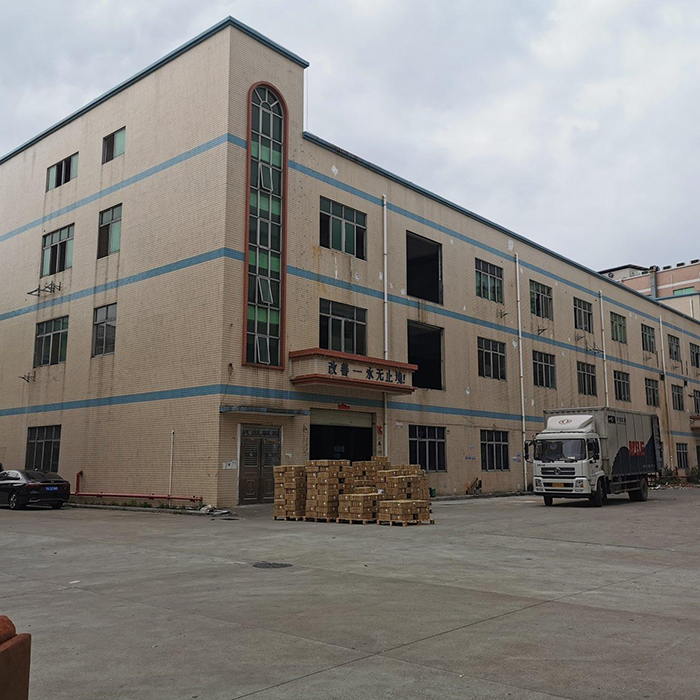
Xiamen Trips Sporting Goods Co.,Ltd specializes in carbon fiber and composite material R&D, design, production, manufacturing, sales, and service. With experience in carbon bicycle rims and wheelsets, Trips works with customers looking for reliable carbon wheel solutions rather than simply a catalog product.
This guide looks at lightweight carbon fibre rims from the perspective of both riding efficiency and wholesale procurement.
1. The User Problem: Does a Lighter Carbon Rim Really Make a Bike More Efficient?
This is the first question many wholesale buyers hear from their customers.
A rider sees a 300–500 g difference between an entry-level wheelset and a lightweight carbon wheelset and naturally asks:
“Will I actually feel the difference?”
The answer is yes—but the effect depends heavily on where that weight is removed and how the wheel is designed.
A wheel is a rotating component. Mass located farther from the hub has a different influence on acceleration than mass concentrated around the hub. This is why rim weight deserves particular attention when discussing lightweight wheel performance.
For climbing and repeated acceleration, reducing rim mass can make the bike feel more responsive.
But there is an important catch:
Lightweight does not automatically mean faster in every riding situation.
For flat and high-speed riding, aerodynamic drag can become more important than saving a few hundred grams. Cycling industry guidance commonly places many riders in a practical 40–65 mm rim-depth range because it balances aerodynamic performance against additional mass and crosswind sensitivity.
Therefore, a wholesale buyer should not ask:
“What is the lightest rim you can supply?”
A better question is:
“What is the best weight, rim depth, stiffness, and durability combination for my target bicycle?”
2. Product Selection: Which Lightweight Carbon Fibre Rim Should a Wholesale Buyer Choose?
Not every bicycle in your product portfolio needs the same carbon rim.
A useful wholesale strategy is to divide products into several performance categories.
Lightweight Climbing Carbon Rims
Typical characteristics:
25–35 mm rim depth
Low rim mass
Responsive acceleration
Low crosswind sensitivity
Designed for climbing and mountainous terrain
These rims are suitable for:
Lightweight road bikes
Climbing bikes
Mountain racing
Premium enthusiast bicycles
The commercial advantage is straightforward: they can be positioned as a premium lightweight performance upgrade.
All-Round Carbon Road Rims
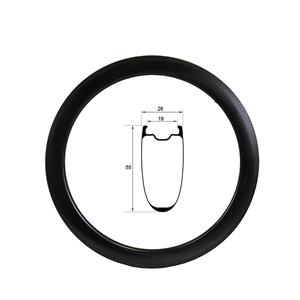
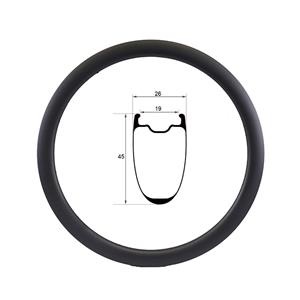
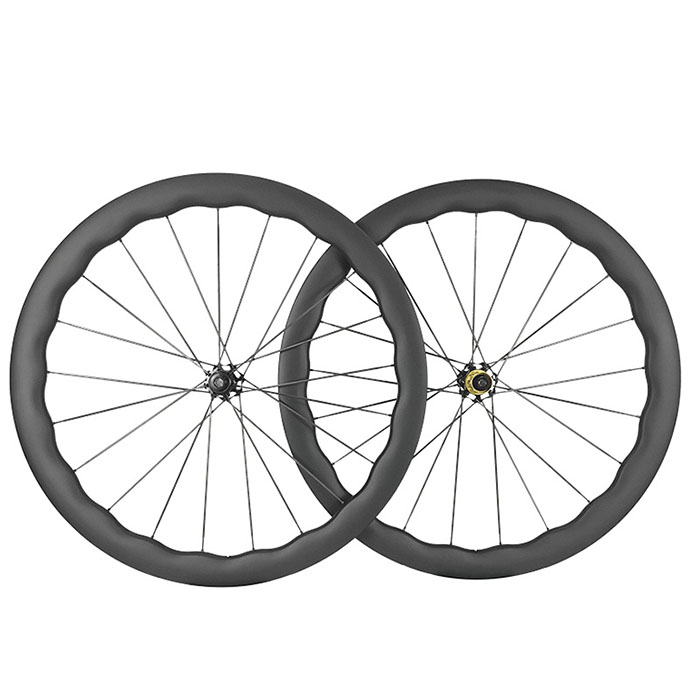
A 40–55 mm profile can provide a useful compromise between weight and aerodynamics.
These products are suitable for:
Road racing
Endurance riding
Gran Fondo
Mixed terrain
Performance-oriented road bikes
For many wholesale customers, this category is particularly attractive because it can serve a much broader customer base than an ultra-specialized climbing rim.
Deep-Section Carbon Rims
Typical applications include:
Flat-road racing
High-speed group riding
Triathlon
Time trial
Aero road bikes
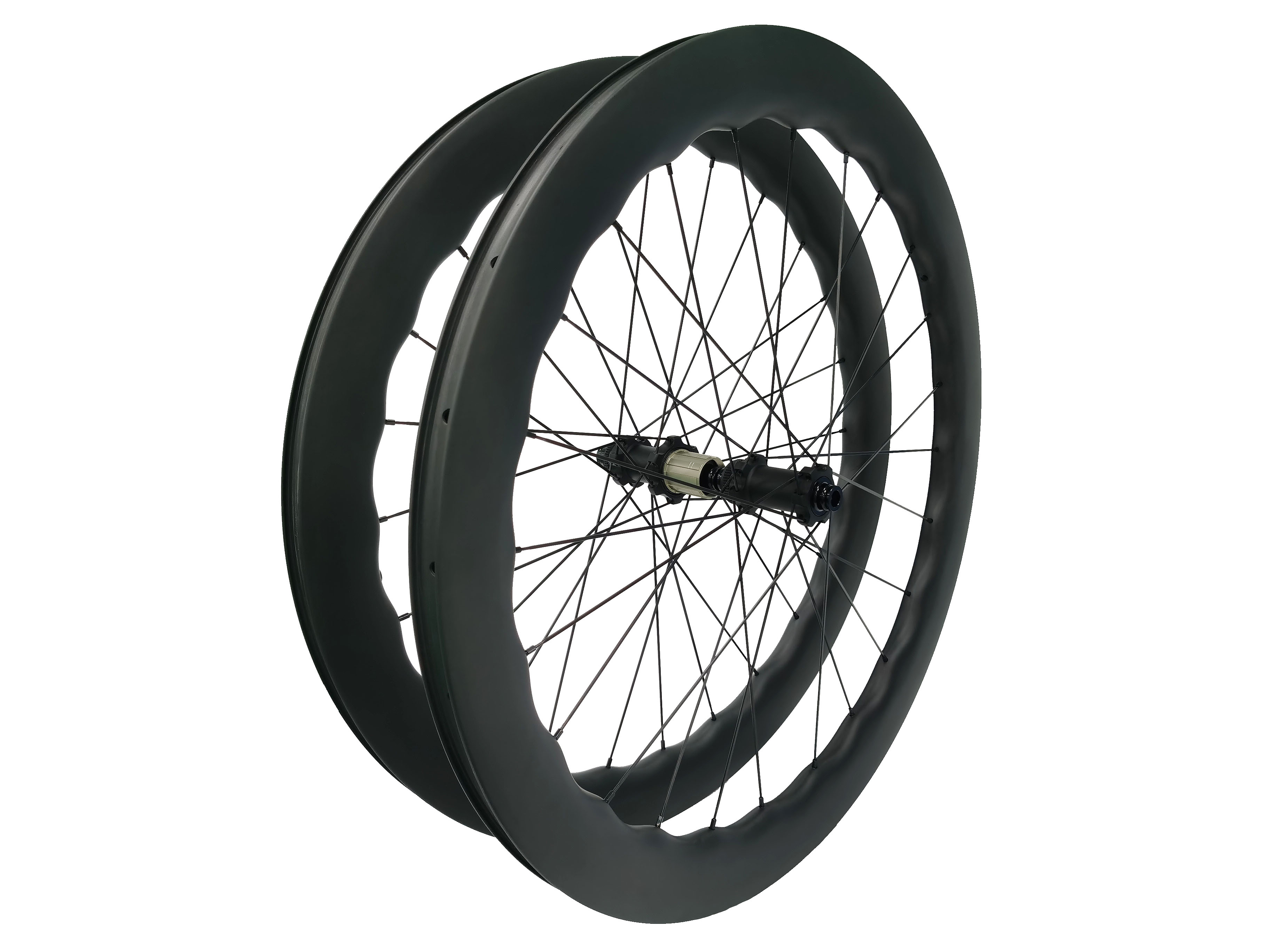
The deeper profile increases the aerodynamic focus, although it can also increase sensitivity to crosswinds. Modern rim development therefore needs to consider the interaction between rim depth, tire width, rim shape, and wind angle—not simply make the rim deeper. Recent industry analysis likewise emphasizes the trade-off between aerodynamic benefit and crosswind handling.
3. Technical Parameters: What Actually Determines Riding Efficiency?
For wholesale buyers, the specification sheet should go far beyond “carbon + lightweight.”
Here are the parameters that deserve closer attention.
| Parameter | Lightweight Climbing Rim | All-Round Carbon Rim | Aero Carbon Rim |
|---|---|---|---|
| Typical Rim Depth | 25–35 mm | 40–55 mm | 55–65+ mm |
| Primary Goal | Low weight | Balance | Aerodynamics |
| Approx. Wheelset Weight | 1,150–1,350 g* | 1,250–1,500 g* | 1,350–1,700 g* |
| Climbing Efficiency | Excellent | Very Good | Good |
| Aerodynamic Potential | Moderate | High | Very High |
| Crosswind Sensitivity | Low | Moderate | Higher |
| Ideal Customer | Climbers | All-round riders | Racers/TT riders |
| Commercial Positioning | Premium lightweight | Mainstream premium | Aero performance |
Indicative industry ranges only. Actual specifications depend on rim construction, hub, spokes, nipples, tire compatibility, and final wheel configuration.
This is an important distinction for wholesale buyers.
A rim cannot be evaluated independently from the complete wheel.
4. Carbon Layup: Where Lightweight Performance Really Starts
The most important part of a carbon rim is often the part the customer cannot see.
Two rims may look almost identical externally but use very different internal carbon structures.
Carbon fiber can be arranged in different orientations according to the forces experienced by the rim.
Engineers may optimize reinforcement around:
Spoke holes
Rim bed
Bead seat
Sidewalls
Valve area
High-impact zones
The objective is to avoid unnecessary material while maintaining adequate structural performance.
This is where an experienced carbon manufacturer has a significant advantage.
At Xiamen Trips Sporting Goods Co.,Ltd, carbon fiber product development is integrated with manufacturing, allowing engineering requirements to be considered together with production feasibility and quality control.
For a wholesale buyer, this matters because a lightweight sample is not enough.
The real test is whether the factory can reproduce the same specification consistently across hundreds or thousands of units.
5. Rim Depth vs. Weight: Why “Lighter” Is Not Always “More Efficient”
Imagine two wheelsets:
Wheelset A
1,250 g
32 mm rim
Climbing-oriented design
Wheelset B
1,450 g
55 mm rim
Aerodynamic design
If both are used on a steep mountain climb, Wheelset A may be the more logical product.
But if the rider spends most of the race at 35–45 km/h on flat or rolling roads, Wheelset B may offer greater overall efficiency because its aerodynamic advantages can offset the additional mass.
This is why wholesale buyers should build a product matrix, rather than source one wheel specification for every customer.
A practical range could include:
30–35 mm → climbing
45–50 mm → all-round
55–65 mm → aero performance
This approach gives distributors and bicycle brands more opportunities to match products with different price and performance segments.
6. Application Scenarios: Where Lightweight Carbon Rims Make the Most Sense
Scenario 1: Climbing Road Bikes
A climbing-oriented bicycle benefits from low system weight.
For this market, wholesale buyers should prioritize:
Low rim weight
Reliable stiffness
Low rotational mass
Appropriate spoke count
Good climbing responsiveness
The visual selling point is also strong: a lightweight carbon wheelset can immediately communicate premium performance.
Scenario 2: Road Racing
Road racing requires a compromise.
A rider may encounter:
Climbs
Descents
Flat sections
Accelerations
Crosswinds
Therefore, an all-round 40–55 mm carbon rim can be more commercially useful than an extremely shallow or extremely deep rim.
Scenario 3: Endurance Bikes
For endurance customers, weight matters, but comfort and reliability matter too.
A wider rim paired with an appropriate tire can create a balanced tire-rim system, while moderate rim depth maintains useful aerodynamic performance.
Scenario 4: Aero Road Bikes
For customers purchasing aero-oriented road bikes, deeper carbon rims can become an important part of the overall performance package.
Here, the sales message should focus on:
Aerodynamics + stiffness + stability + premium appearance
rather than simply advertising low weight.
7. Tubeless Compatibility: Another Parameter Wholesale Buyers Should Check
Modern road-wheel procurement increasingly involves tubeless-ready configurations.
A tubeless-ready carbon rim needs to be designed around:
Rim bed geometry
Bead retention
Internal width
Tire compatibility
Recommended pressure
Rim tape requirements
A lighter rim is not useful if the tire interface is poorly matched to the target tire system.
For wholesale buyers, product documentation should clearly specify compatible tire sizes and installation requirements.
This reduces after-sales problems and helps distributors provide accurate information to end users.
8. Data-Supported Evidence: How Much Efficiency Can a Lightweight Rim Add?
It is tempting to advertise a carbon rim by saying:
“Save 300 g and ride faster.”
That statement is too simplistic.
Actual bicycle performance depends on:
Rider power
Rider position
Terrain
Wind
Gradient
Tire pressure
Rolling resistance
Wheel aerodynamics
Total bicycle weight
For example, reducing 400 g from the wheelset changes total system mass, but the benefit is much more meaningful during climbing and acceleration than during steady-state riding on flat terrain.
On the other hand, aerodynamic wheel testing consistently shows why rim profile matters. Deeper rims can reduce aerodynamic drag under relevant wind angles, while increased depth can also increase crosswind sensitivity.
This leads to an important procurement principle:
The goal is not maximum weight reduction. The goal is maximum performance per gram and per dollar for the intended application.
9. Quality and Testing: What Should a Wholesale Buyer Demand?
A lightweight carbon rim must still be a structural product.
ISO 4210-7:2023 specifically defines test methods for bicycle wheels and rims under the ISO 4210 framework, while ISO 4210-2:2023 establishes safety and performance requirements for relevant bicycle categories, including racing bicycles.
Therefore, buyers should ask suppliers about:
Structural testing
Fatigue testing
Impact testing
Dimensional inspection
Carbon layup consistency
Wheel truing
Spoke tension
Final QC
At Xiamen Trips Sporting Goods Co.,Ltd, carbon rims are rigorously tested according to the company's stated ISO 4210 testing requirements, while complete wheelsets are hand-built and trued by experienced mechanics.
For a wholesale program, this is more valuable than simply receiving a very light prototype.
10. Purchasing Decision: What Should Wholesale Buyers Ask Before Placing an Order?
Before comparing quotations from different factories, create a technical purchasing checklist.
1. What Is the Exact Rim Weight?
Clarify whether the quoted weight refers to:
Bare rim
Front wheel
Rear wheel
Complete wheelset
Also ask about production tolerance.
2. What Is the Complete Wheelset Weight?
A lightweight rim does not necessarily create a lightweight wheelset.
Hub, spokes, nipples, bearings, valves, and tubeless tape all contribute to the final weight.
3. What Is the Rider Weight Limit?
A climbing rim designed for lightweight riders should not automatically be marketed to heavier riders.
Always confirm the manufacturer's recommended system weight.
4. What Tire Sizes Are Supported?
Confirm:
25 mm
28 mm
30 mm
Other intended tire sizes
This is especially important for tubeless-ready products.
5. Can the Factory Customize the Product?
For wholesale customers, ask whether the supplier supports:
Custom logo
Rim depth
Rim width
Carbon layup
Finish
Decals
Hub
Spokes
Packaging
6. What Is the Production Capacity?
A factory may be able to produce 20 sample wheels but struggle with a 500-unit production order.
Production capacity matters when launching a new bicycle model or maintaining stock.
11. Factory Solution: Why Choose Xiamen Trips Sporting Goods Co.,Ltd?
Founded in 2017, Xiamen Trips Sporting Goods Co.,Ltd is an integrated technology manufacturing enterprise specializing in carbon fiber and various composite materials.
The company integrates:
R&D + Design + Production + Manufacturing + Sales + Service
within one business system.
Trips operates a production area of approximately 2,000㎡ and has:
50+ total staff
6 engineers
40+ trained production workers
Approximately 3,000 carbon bicycle rims monthly capacity
Approximately 500 wheelsets monthly capacity
This production structure allows Trips to support both customized development and ongoing wholesale supply.
The company's products have been exported to markets including:
Europe
United States
Thailand
Japan
Korea
Other international markets
For wholesale customers, international experience can also help simplify communication around specifications, packaging, quality requirements, and shipment arrangements.
12. Flexible OEM/ODM Manufacturing for Wholesale Buyers
One of the biggest advantages of working directly with a carbon wheel manufacturer is the ability to develop products around your own market.
Instead of choosing a standard wheel from a distributor's catalog, a bicycle brand can define:
Product Positioning
Lightweight climbing
All-round road
Aero racing
Premium endurance
Technical Configuration
Rim depth
Internal width
Tubeless compatibility
Hub
Spoke
Finish
Branding
Logo
Decal
Color
Packaging
This is particularly valuable for brands trying to avoid direct price competition.
A product with a defined specification and private-label identity is much harder for competitors to compare purely on price.
13. From Product Requirement to Wholesale Delivery: The Trips Conversion Path
A successful wholesale project should not begin with:
“Please send your price list.”
It should begin with the product requirement.
Step 1 — Define Your Target Market
Who will buy the wheel?
Climbers?
Amateur racers?
Endurance riders?
Triathletes?
Premium bicycle customers?
Step 2 — Set the Performance Target
Define:
Rim depth
Weight target
Tire system
Rider weight range
Intended terrain
Step 3 — Select the Carbon Structure
Trips can evaluate the appropriate rim construction and production requirements.
Step 4 — Confirm Sample Specifications
The sample should establish the exact:
Dimensions
Weight
Finish
Hub
Spoke configuration
Branding
Step 5 — Quality Verification
Production samples are checked before moving into mass production.
Step 6 — Bulk Production
Once specifications are approved, production follows the confirmed technical standard.
Step 7 — Export and Delivery
Trips supports international customers with established production and export experience.
14. Why Lightweight Carbon Fibre Rims Can Be a Strong Wholesale Product
For a distributor, lightweight carbon rims offer more than technical performance.
They also create strong commercial positioning.
Premium Product Image
Carbon immediately positions a wheel above basic aluminum products.
Higher Product Differentiation
Different rim depths and carbon constructions allow a brand to create multiple product levels.
Upgrade Potential
Existing road-bike customers often look to wheels as one of the most visible performance upgrades.
OEM Branding Opportunities
Private-label production allows distributors to build their own brand rather than competing entirely on factory pricing.
Product Line Expansion
A single carbon wheel platform can potentially be developed into:
Climbing version
All-round version
Aero version
Different finishes
Different hub configurations
FAQ: Lightweight Carbon Fibre Rims for Wholesale Buyers
Q1. Are lightweight carbon rims always faster?
No. Lightweight construction primarily benefits acceleration and climbing. Aerodynamics can become more important at higher speeds on flat or rolling terrain.
Q2. What rim depth is best for an all-round road wheel?
For many road applications, approximately 40–55 mm is a practical range, offering a balance between aerodynamic performance, weight, and handling. The ideal specification depends on the target rider and market.
Q3. Are deeper carbon rims better than lightweight climbing rims?
Neither is universally better. A deeper rim may be more suitable for high-speed road racing, while a shallow lightweight rim may be preferable for climbing.
Q4. What should wholesalers compare besides price?
Compare:
Complete wheelset weight
Rim construction
Rim depth
Internal width
Tire compatibility
Testing
Rider weight limit
Production capacity
OEM capability
Warranty
Lead time
Q5. Can Xiamen Trips Sporting Goods Co.,Ltd provide OEM carbon rims?
Yes. Trips' integrated R&D and manufacturing structure supports customized carbon rim and wheelset development for international customers.
Q6. Does a lightweight carbon rim need to be tested?
Absolutely. Weight reduction should never replace structural verification. ISO 4210-7:2023 provides standardized wheel and rim test methods within the ISO 4210 bicycle safety framework.
Conclusion: For Wholesale Buyers, Efficiency Starts with the Right Specification
How can lightweight carbon fibre rims improve your bike's riding efficiency?
The answer goes beyond simply removing grams.
A properly engineered lightweight carbon rim can improve the riding characteristics of a bicycle by reducing mass, particularly at the rotating rim, while allowing engineers to optimize stiffness, aerodynamics, rim profile, and tire compatibility.
But the best wholesale product is not necessarily the lightest one.
For a climbing bike, a shallow and lightweight carbon rim may be the right solution.
For an all-round road bike, a 40–55 mm rim can provide a stronger balance between weight and aerodynamics.
For a racing or aero bike, a deeper carbon profile may create greater value even if the wheelset is slightly heavier.
For wholesale buyers, the real objective should be:
the right performance specification + consistent manufacturing + reliable quality + flexible customization + predictable supply.
With its integrated carbon fiber R&D and manufacturing capabilities, Xiamen Trips Sporting Goods Co.,Ltd can work with bicycle brands, distributors, wholesalers, and OEM customers to develop carbon rim and wheel solutions around specific market requirements.
Don't buy carbon rims simply because they are light. Choose the carbon rim that makes the entire bicycle—and your product line—work better.