What Is the Lightest Carbon Wheelset Available? A Practical Guide for Road Cyclists and Bike Brands
When cyclists start looking for a performance upgrade, one specification often appears at the top of the list: wheelset weight.
A lightweight carbon wheelset can make a road bike feel more responsive, especially when accelerating, climbing, and changing pace. But there is an important question behind the headline:
What is actually the lightest carbon wheelset available—and should the lightest wheel always be your first choice?
The answer is more complicated than simply finding the smallest number on a product specification sheet.
A wheelset that weighs 1,100 g may look impressive, but if it sacrifices impact resistance, spoke durability, aerodynamic performance, or long-term reliability, it may not be the right solution for everyday riding.
From the perspective of a carbon wheel manufacturer, Xiamen Trips Sporting Goods Co.,Ltd believes that the better question is:
How light can a carbon wheelset be while still providing the strength, stiffness, reliability, and riding characteristics required for its intended application?
This article explains how ultra-light carbon wheelsets are designed, where they perform best, what technical specifications buyers should examine, and how to choose a lightweight wheelset without falling into the “lighter is always better” trap.
1. Product Definition: What Is a Lightweight Carbon Wheelset?
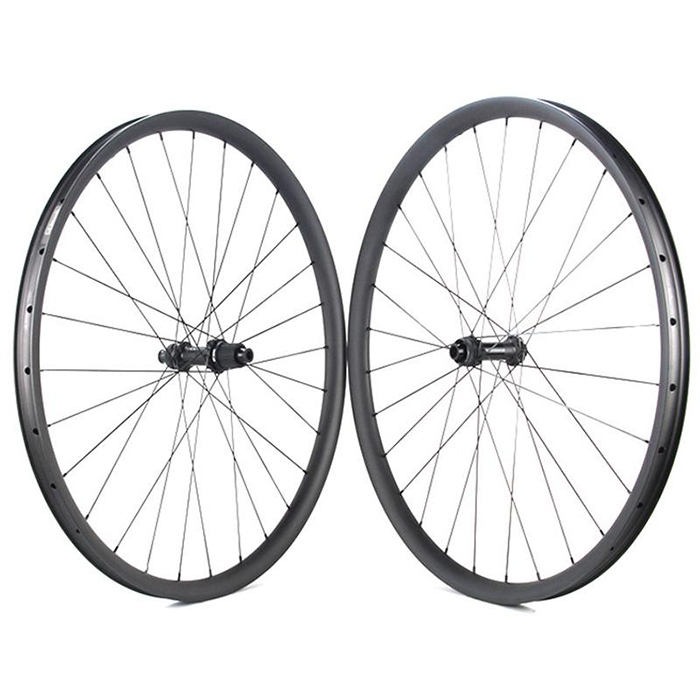
A carbon wheelset consists of two complete wheels manufactured around carbon fiber rims, hubs, spokes, nipples, bearings, and related components.
The term lightweight carbon wheelset generally refers to a wheelset engineered to minimize mass while maintaining sufficient structural performance.
For road bikes, lightweight wheelsets are typically designed around:
700C wheel size
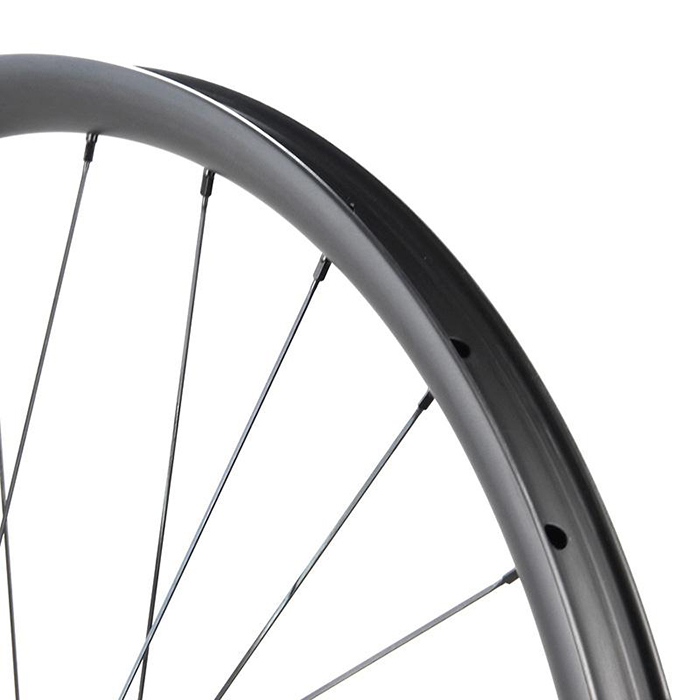
Shallow or medium-depth carbon rims
Optimized carbon fiber layup
Lightweight hubs
Low spoke count
Tubeless-ready or clincher compatibility
Precision wheel building
The lightest possible wheel is not necessarily the best wheel.
For example, a climbing-focused wheelset may prioritize a 30–40 mm rim profile and low rotational mass, while an aerodynamic race wheel may intentionally use a deeper 50–65 mm rim despite being slightly heavier.
That is why professional wheel development focuses on system weight, not simply the rim weight printed in a catalog.
2. How Light Can a Carbon Wheelset Actually Be?
There is no single permanent answer to “the lightest carbon wheelset available.”
Products change, component combinations vary, and manufacturers frequently develop new prototypes. A claimed weight may also depend on:
Rim depth
Rim width
Hub model
Spoke type
Spoke count
Nipples
Tubeless tape
Bearings
Production tolerance
As a practical industry reference, performance carbon road wheelsets can fall into several broad categories.
| Wheelset Category | Typical Approx. Weight | Primary Objective | Typical Use |
|---|---|---|---|
| Ultra-light climbing | 1,100–1,250 g | Minimum mass | Mountain racing |
| Lightweight performance | 1,200–1,400 g | Weight + stiffness | Road racing |
| All-round carbon | 1,300–1,500 g | Balance | Daily performance |
| Aero carbon | 1,400–1,650 g | Aerodynamics | Flat/rolling racing |
| Deep-section racing | 1,450–1,750 g | Maximum aero potential | TT/Triathlon |
These are indicative ranges rather than universal specifications. Actual wheelset weight depends on the specific construction and components.
For buyers, the important lesson is simple:
Never compare wheelset weight without comparing the complete specification.
3. Where Does a Lightweight Carbon Wheelset Make the Biggest Difference?
Climbing: The Most Obvious Application
Mountain roads are where low wheel weight can become particularly attractive.
During repeated acceleration on steep gradients, reducing rotating mass can make the bicycle feel more responsive.
A lightweight wheelset can help during:
Steep climbs
Out-of-saddle acceleration
Hairpin exits
Repeated attacks
Mountain-stage racing
For dedicated climbers, a shallow carbon wheelset may therefore be a better choice than a 60 mm aerodynamic wheel.
4. Acceleration: Why Rim Weight Matters
Not all grams are equally important.
Weight located farther from the wheel's rotational axis has a greater influence on rotational inertia than weight concentrated near the hub.
This means reducing mass from the outer rim can have a more noticeable effect on acceleration than removing the same amount of weight from the center of the wheel.
This is one reason carbon composite technology is attractive for performance wheel design.
By carefully optimizing:
Rim wall thickness
Carbon fiber orientation
Reinforcement zones
Rim profile
manufacturers can reduce unnecessary material while maintaining structural integrity.
5. Does the Lightest Wheel Always Make You Faster?
No.
This is one of the biggest misconceptions in bicycle wheel purchasing.
Imagine two wheelsets:
Wheelset A
1,200 g
32 mm rim depth
Optimized for climbing
Wheelset B
1,400 g
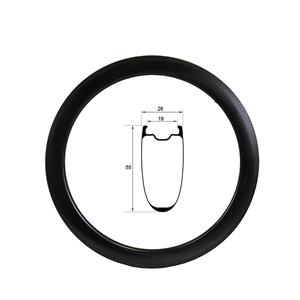
55 mm rim depth
Aerodynamically optimized
On a steep mountain climb, Wheelset A may have the advantage.
But on a fast, flat course, Wheelset B could potentially be faster because its aerodynamic benefit can outweigh the additional mass.
The correct wheel therefore depends on the relationship between:
Weight + Aerodynamics + Terrain + Rider Speed + Wind Conditions.
6. Technical Parameters Buyers Should Compare
If you are searching for a lightweight carbon wheelset, don't stop at the “grams” specification.
Evaluate the entire system.
| Parameter | Lightweight Climbing Wheel | All-Round Carbon Wheel | Aero Carbon Wheel |
|---|---|---|---|
| Wheel Size | 700C | 700C | 700C |
| Typical Rim Depth | 30–40 mm | 40–55 mm | 50–65+ mm |
| Approx. Weight | 1,100–1,300 g | 1,250–1,500 g | 1,400–1,700 g |
| Primary Advantage | Low weight | Balance | Aerodynamics |
| Climbing | ★★★★★ | ★★★★☆ | ★★★☆☆ |
| Aerodynamics | ★★★☆☆ | ★★★★☆ | ★★★★★ |
| Crosswind Stability | ★★★★★ | ★★★★☆ | ★★★☆☆ |
| Racing | Excellent | Excellent | Excellent |
| Endurance | Good | Excellent | Good |
Again, these figures are reference ranges rather than guarantees for every product.
7. Carbon Layup: The Hidden Factor Behind Low Weight
Two carbon rims can have the same external appearance but completely different internal structures.
The difference is often found in the carbon layup.
Carbon fiber can be arranged in different orientations to manage:
Radial loads
Lateral loads
Impact forces
Spoke tension
Rim compression
A manufacturer attempting to reduce weight must determine where material can safely be removed and where reinforcement must remain.
This is where engineering experience becomes critical.
At Xiamen Trips Sporting Goods Co.,Ltd, carbon fiber R&D, product design, manufacturing, and quality control are integrated into one production system.
The objective is not simply to produce a lighter rim, but to develop a structure capable of delivering the required performance for its intended riding application.
8. Rim Depth and Weight: Finding the Right Balance
A common mistake is to compare a 35 mm lightweight wheel with a 60 mm aero wheel and conclude that one is “better.”
They are designed for different purposes.
30–35 mm Carbon Rim
Ideal for:
Mountain climbing
Lightweight builds
Hilly road races
Riders prioritizing responsiveness
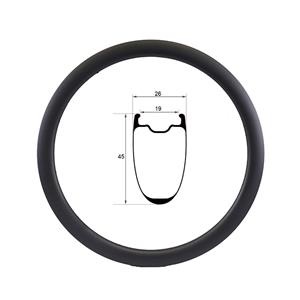
40–50 mm Carbon Rim
A versatile middle ground.
Suitable for:
All-round road cycling
Gran Fondo
Amateur racing
Mixed terrain
50–60 mm Carbon Rim
Designed with greater emphasis on aerodynamic performance.
Suitable for:
Flat road racing
Fast group rides
Time trials
Triathlon
The optimal rim depth is therefore a performance decision rather than simply a weight decision.
9. Hub and Spoke Selection Also Affect Final Weight
A carbon rim may be extremely light, but the completed wheelset can still be relatively heavy because of the hub and spoke configuration.
Important factors include:
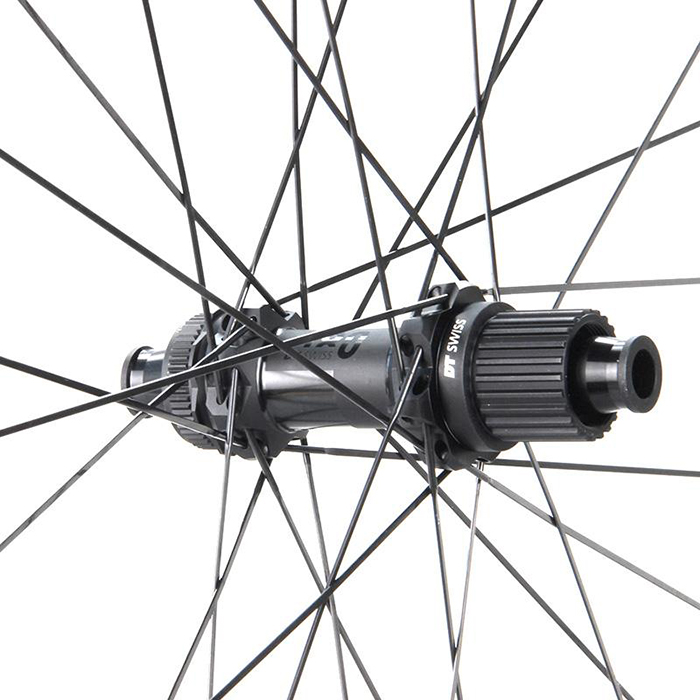
Hub Shell
A lightweight hub reduces central wheel mass without dramatically changing rotational inertia.
Bearings
High-quality bearings can provide smooth rotation while maintaining appropriate durability.
Spoke Count
Reducing spoke count can lower weight and aerodynamic drag, but sufficient structural support must be maintained.
Spoke Material
Bladed or lightweight spokes can provide a useful combination of:
Low mass
Aerodynamic efficiency
Stiffness
The final wheel should therefore be considered as a complete engineered system.
10. Tubeless-Ready Design and Lightweight Wheels
Modern performance road cycling increasingly uses tubeless systems.
A tubeless-ready carbon wheel can provide:
Lower tire pressure options
Improved ride comfort
Reduced puncture risk when used with sealant
Potential rolling-efficiency benefits
However, tubeless compatibility adds structural and dimensional requirements to the rim.
The rim bed must be designed to work correctly with compatible tires and rim tape.
For OEM buyers, this means that “lightweight” should never be evaluated independently from tire-system compatibility.
11. Data-Supported Evidence: What Does Weight Actually Mean?
Consider a hypothetical 8 kg road bike.
If a rider replaces a 1,800 g aluminum wheelset with a 1,300 g carbon wheelset, the total bicycle mass decreases by approximately:
500 g.
That is a meaningful reduction—but it does not mean the rider will automatically become 5–10% faster.
Cycling performance depends on multiple variables:
Rider power
Gradient
Distance
Aerodynamic drag
Rolling resistance
Bicycle weight
Wind
Tire pressure
Riding position
On a steep climb, the reduction in mass can be useful.
On a flat road, however, aerodynamic drag usually becomes much more important than a small reduction in total bicycle weight.
This is why a 1,300 g aerodynamic wheelset may outperform a 1,150 g climbing wheelset on a fast course.
12. ISO 4210 Testing: Why Safety Matters More Than a Record-Breaking Number
Ultra-light construction has an obvious engineering challenge:
Every gram removed must be considered carefully.
A manufacturer cannot simply reduce carbon layers indefinitely.
The rim must continue to withstand:
Impact loads
Fatigue
Spoke tension
Road vibration
Braking forces where applicable
Tire pressure loads
The carbon rims produced by Xiamen Trips Sporting Goods Co.,Ltd are rigorously tested under the international ISO 4210 standard.
For buyers, testing information is one of the most useful indicators of whether a lightweight wheel is genuinely engineered as a performance product rather than simply optimized for a marketing specification.
13. Purchasing Questions: What Should You Ask a Carbon Wheel Factory?
If you are purchasing carbon wheels for yourself, or sourcing products for a bicycle brand, distributor, or retailer, ask the manufacturer these questions.
Question 1: Is the advertised weight the complete wheelset weight?
Clarify whether the figure includes:
Hubs
Spokes
Nipples
Rim tape
Tubeless valves
Otherwise, two suppliers may appear to have different weights simply because they use different measurement methods.
Question 2: What is the rider weight limit?
A lightweight racing wheel may not be suitable for every rider.
Always confirm the manufacturer's recommended rider and system weight limitations.
Question 3: What testing has been completed?
Ask about:
ISO testing
Impact testing
Fatigue testing
Production inspection
Question 4: What is the warranty policy?
A lightweight wheel should have a clear warranty policy covering manufacturing defects and appropriate after-sales procedures.
Question 5: Can the wheel be customized?
For OEM customers, important options may include:
Rim depth
Rim width
Carbon layup
Logo
Surface finish
Hub
Spokes
Decals
Packaging
14. Why Choose Xiamen Trips Sporting Goods Co.,Ltd?
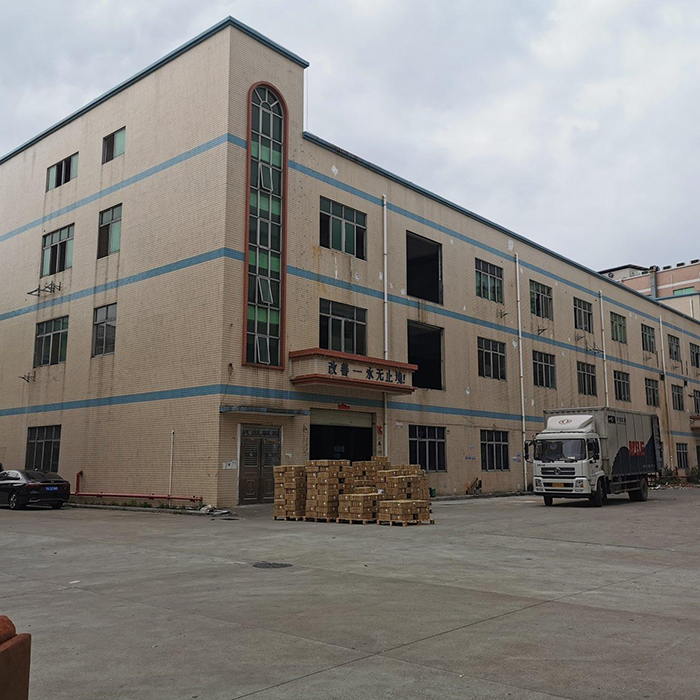
Founded in 2017, Xiamen Trips Sporting Goods Co.,Ltd is an integrated technology manufacturing enterprise specializing in carbon fiber and composite materials.
The company combines:
R&D + Design + Manufacturing + Sales + Service
within one production system.
Trips operates a production area of approximately 2,000㎡ with:
50+ total employees
6 engineers
40+ trained production workers
Approximately 3,000 carbon bicycle rims monthly capacity
Approximately 500 wheelsets monthly capacity
The company has extensive experience in carbon rim development and manufacturing.
Its products have been exported to:
Europe
United States
Thailand
Japan
Korea
Other international markets
This international experience allows Trips to work with bicycle brands, distributors, and professional cycling customers with different product requirements.
15. From Lightweight Concept to Finished Wheel: Trips' Development Process
For OEM and wholesale customers, selecting the lightest wheel is only the beginning.
A professional development process should follow several stages.
Step 1 — Define the Target Application
Is the product intended for:
Climbing?
Road racing?
Endurance?
Triathlon?
Lightweight premium bicycles?
Step 2 — Establish the Weight Target
For example:
Target: complete wheelset under 1,300 g
The engineering team then determines how to distribute the weight across the rim, hub, spokes, and other components.
Step 3 — Select the Rim Profile
Choose a suitable depth and width according to aerodynamic and structural requirements.
Step 4 — Develop the Carbon Layup
Optimize fiber orientation and reinforcement zones.
Step 5 — Produce Samples
Prototype wheels are manufactured and inspected.
Step 6 — Conduct Testing
Structural performance and dimensional consistency are verified.
Step 7 — Mass Production
Once specifications are approved, standardized production processes are implemented.
This approach is more reliable than simply asking a factory:
“Can you make me a 1,100 g wheel?”
The better question is:
“Can you develop a lightweight wheel that meets my target weight, rider requirements, durability expectations, and intended riding conditions?”
FAQ: Lightweight Carbon Wheelsets
Q1. What is the lightest carbon wheelset available?
There is no single permanent answer. Ultra-light road wheelsets can enter the approximately 1,100–1,200 g range, but actual products vary by configuration and production generation.
Q2. Is a 1,100 g wheelset better than a 1,400 g wheelset?
Not necessarily. The lighter wheel may be better for climbing, while the heavier wheel may offer superior aerodynamics, stiffness, or durability.
Q3. What rim depth is best for climbing?
Generally, 30–40 mm is a popular range for riders prioritizing low weight and climbing performance.
Q4. Are lightweight carbon wheels suitable for heavier riders?
Potentially, but the manufacturer's rider-weight and system-weight limits must always be checked.
Q5. Do carbon wheels improve acceleration?
A lower-mass wheelset, particularly with lower rim mass, can make acceleration feel more responsive.
Q6. Should I choose lightweight or aero wheels?
Choose lightweight wheels if steep climbing is your main priority. Choose deeper aero wheels if you spend more time riding quickly on flat or rolling terrain.
Conclusion: The Lightest Wheel Is Not Always the Best Wheel
So, what is the lightest carbon wheelset available?
The answer may change every time a new rim, hub, spoke, or manufacturing technology enters the market.
More importantly, the lowest number on the scale does not automatically represent the highest performance.
A genuinely high-performance lightweight carbon wheelset should balance:
Low Weight + Structural Strength + Stiffness + Aerodynamics + Durability + Reliable Manufacturing
For climbing-focused riders, a lightweight 30–40 mm wheelset may be ideal. For all-round riders, a 40–55 mm wheel can provide a better compromise. For high-speed racing, accepting a little additional weight for a deeper aerodynamic profile may actually produce a faster bicycle.
For bicycle brands and distributors, the same principle applies: the right carbon wheel should be engineered around the target market rather than a single headline specification.
With integrated carbon fiber R&D, manufacturing expertise, ISO 4210 testing, experienced wheel assembly, and international production capabilities, Xiamen Trips Sporting Goods Co.,Ltd can support customers from initial product requirements and wheel design through sampling, mass production, and global delivery.
Don't simply ask for the lightest carbon wheel. Ask for the lightest wheel that is right for the ride.