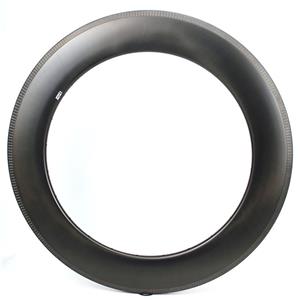
What Makes Custom Carbon TT Disc Wheels Ideal for UCI Track Competition?
In competitive track cycling, equipment selection is closely connected to speed, structural reliability, and competition regulations. A well-designed wheel must do more than look aerodynamic. It needs to withstand repeated high-power efforts, maintain dimensional stability, provide predictable handling, and meet the technical requirements of the event.
This is why professional cycling teams, distributors, and bicycle brands pay close attention to the design and manufacturing of a carbon TT disc wheel.
A carbon disc wheel features a continuous aerodynamic surface that reduces the airflow disturbance associated with conventional spokes. When engineered with appropriate carbon fiber reinforcement, resin systems, and structural geometry, it can deliver a combination of aerodynamic performance, stiffness, and lightweight construction.
However, not every carbon disc wheel is automatically suitable for UCI track competition. Wheel approval, impact resistance, event-specific restrictions, and component compatibility must all be considered before procurement.
For cycling brands and team buyers, understanding these requirements is the first step toward developing reliable custom carbon track bike wheels.
1. Why Do Track Racing Teams Choose Carbon TT Disc Wheels?
Track cycling is a discipline where small performance differences can matter. During individual pursuit, team pursuit, and other timed events, riders aim to maintain high speeds while minimizing aerodynamic resistance.
Wheel design is an important part of this process.
Traditional spoked wheels contain multiple exposed spokes. As the wheel rotates, these spokes interact with the airflow and create aerodynamic disturbances. A disc wheel replaces most or all of this open structure with a continuous side surface.
This design offers several potential advantages.
1.1 Aerodynamic Efficiency
The continuous surface of a disc wheel reduces the number of exposed spoke elements interacting with the airflow. This can help reduce aerodynamic drag compared with conventional spoked designs.
At high racing speeds, aerodynamic resistance becomes a major factor in the power required to maintain speed. A properly designed carbon TT disc wheel can therefore be an important component of an aerodynamic track bike setup.
However, actual aerodynamic performance depends on more than the presence of a disc. The outer profile, surface transitions, tire width, hub area, and interaction with the bicycle frame all influence the result.
1.2 Structural Stiffness Under High Loads
Track riders generate substantial power during accelerations, standing starts, and sustained high-speed efforts.
A carbon disc wheel uses a composite structure that connects the hub area and rim through a continuous or reinforced disc construction. The carbon fiber orientation, core material, bonding process, and interface design determine how loads are distributed.
A properly engineered wheel should maintain its structural integrity under the repeated loads associated with its intended application.
1.3 Lightweight Composite Construction
Carbon fiber has a high strength-to-weight potential, making it suitable for performance-oriented bicycle components.
By controlling fiber orientation, laminate thickness, resin content, and structural reinforcement, manufacturers can optimize the balance between weight, stiffness, and durability.
For professional teams and bicycle brands, this makes custom carbon disc wheels an attractive option when developing specialized racing equipment.
1.4 A Clean and Integrated Racing Appearance
The smooth surface of a disc wheel also creates a distinctive visual identity. Cycling brands can use the side panels for logos, graphics, and customized finishes.
For OEM buyers, this provides opportunities to develop a recognizable product design while maintaining consistent brand presentation across a wheel range.

2. What Types of Carbon Disc Wheels Should Buyers Consider?
Before ordering custom carbon track bike wheels, buyers should distinguish between track-specific disc wheels and road time trial disc wheels.
Although they may share a similar aerodynamic concept, their braking systems, component interfaces, and intended applications can be different.
2.1 Track-Specific Carbon Disc Wheels
Track bicycles generally use a fixed-gear drivetrain and do not have conventional bicycle brakes. A track-specific disc wheel is therefore designed around the requirements of track frames, hubs, tires, and competition use.
Key considerations include:
Track hub and axle compatibility
Wheel diameter and frame clearance
Structural stiffness under track loads
Tire compatibility
Wheel approval and event eligibility
Surface finish and sponsor branding
For teams competing in UCI track events, the specific wheel model must meet the applicable UCI requirements.
2.2 Road TT Carbon Disc Wheels
Road time trial disc wheels are designed for road TT bicycles and may need to accommodate different hub, axle, tire, and braking configurations.
Depending on the model, they may use a rim-brake track or a disc-brake-compatible hub interface.
A rim-brake version requires a suitable braking surface. A disc-brake version does not rely on a rim braking track, but it must match the bicycle's rotor mounting and axle standards.
These configurations should not be treated as interchangeable with track-specific wheels.
2.3 Front and Rear Disc Wheel Applications
Front and rear wheel selection also requires different considerations.
A front disc wheel can produce substantial aerodynamic side force and steering effects in crosswinds. For this reason, competition rules may restrict its use in certain track events.
A rear disc wheel is commonly considered for aerodynamic track setups because it does not directly create the same steering input at the front of the bicycle.
For teams purchasing a complete racing wheelset, the front and rear configurations should be evaluated separately rather than assuming that identical designs are suitable for both positions.

3. Carbon Fiber Manufacturing: What Determines Wheel Quality?
The performance of a carbon TT disc wheel depends heavily on its composite construction.
A carbon wheel is not simply a plastic component reinforced with fibers. It is an engineered laminate in which fiber direction, material distribution, resin properties, and manufacturing conditions influence the final mechanical behavior.
For OEM and wholesale buyers, the following manufacturing factors deserve particular attention.
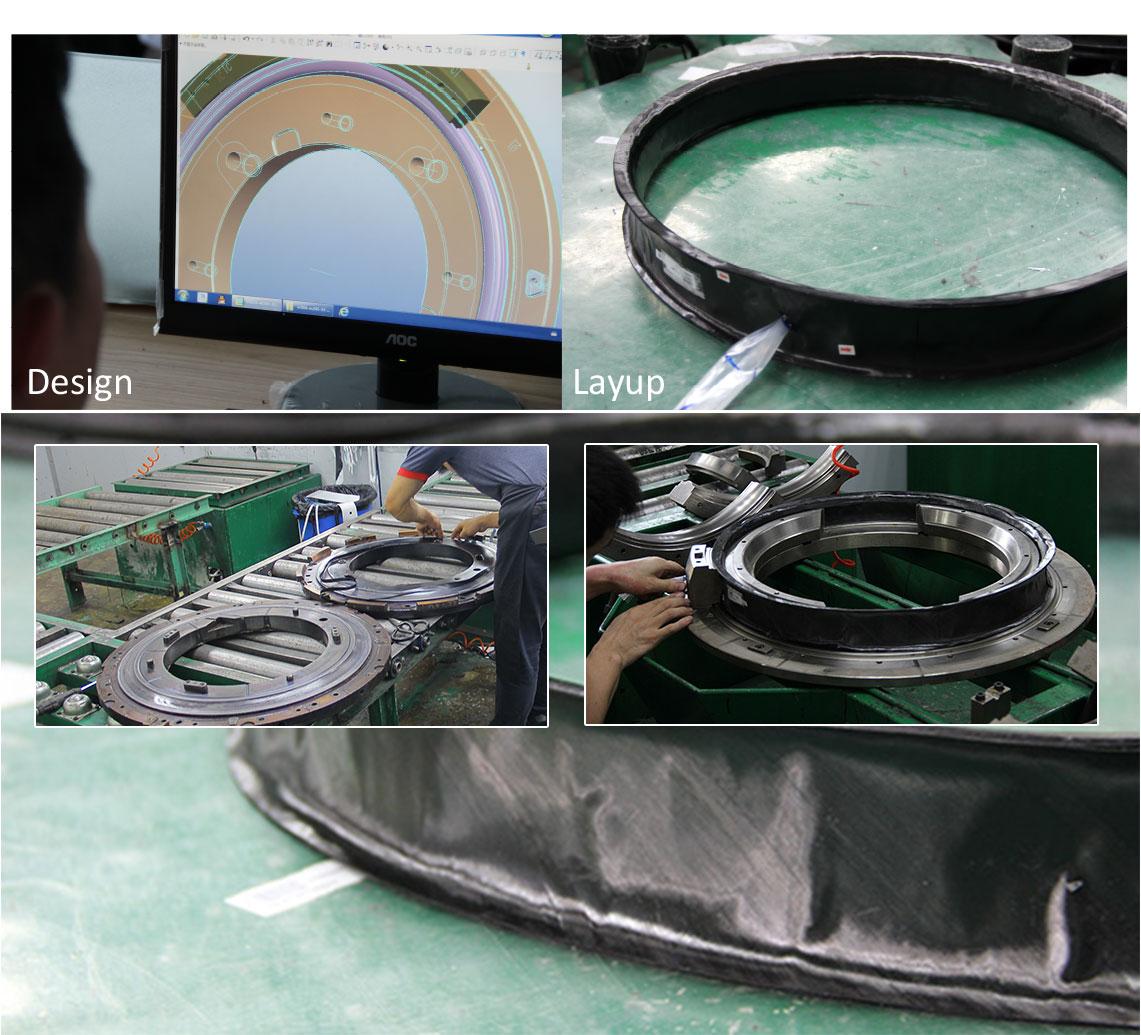
3.1 Carbon Fiber Layup Design
Carbon fiber layup determines how the wheel responds to different loading directions.
Fibers oriented in one direction provide different mechanical characteristics from fibers placed at another angle. A wheel structure therefore needs a carefully planned laminate schedule to distribute loads across the disc, rim, and hub interface.
Important considerations include:
Fiber type and material specifications
Fiber orientation and layer sequence
Reinforcement around the hub interface
Rim-to-disc transition design
Local reinforcement in high-stress areas
Consistency between production batches
A suitable layup should support the intended stiffness and strength requirements without adding unnecessary material.
3.2 Resin System and Bonding Quality
The resin system transfers loads between carbon fibers and helps form the composite structure.
Resin selection and processing conditions influence the finished component's mechanical properties, surface quality, and resistance to environmental exposure.
For bonded disc-wheel constructions, the quality of the connection between the disc body, rim, and hub interface is also critical.
Manufacturers should control material storage, preparation, molding conditions, curing parameters, and bonding procedures.
3.3 Molding and Curing Process
Manufacturing consistency is essential for carbon composite products.
Poorly controlled molding or curing can lead to defects such as voids, resin-rich areas, uneven thickness, or inconsistent bonding.
A controlled manufacturing process should address:
Mold condition and dimensional accuracy
Material cutting and layup accuracy
Resin and curing process control
Pressure and temperature consistency
Demolding and finishing procedures
Final dimensional inspection
For distributors and cycling brands, consistent production quality is just as important as the performance of an individual sample.
3.4 Surface Finish and Branding
The outer surface of a carbon disc wheel is highly visible. Surface defects, uneven finishes, and inconsistent graphics can affect the perceived quality of a finished product.
OEM projects may require different surface treatments, including matte or gloss finishes, custom colors, decals, and private-label graphics.
Buyers should confirm the finishing specification, logo placement, color consistency, and packaging requirements before approving mass production.
4. Technical Parameters That Matter When Buying Custom Carbon Track Bike Wheels
A professional procurement decision should be based on measurable specifications rather than general descriptions such as lightweight, stiff, or aerodynamic.
The following table provides a practical checklist for evaluating UCI track racing wheel projects.
| Technical parameter | What buyers should confirm | Why it matters |
|---|---|---|
| Wheel size | Nominal diameter and complete tire fit | Ensures frame and fork compatibility |
| Wheel position | Front, rear, or complete wheelset | Affects handling and event suitability |
| Disc construction | Full disc, reinforced disc, or specific composite architecture | Determines structural design |
| Carbon layup | Fiber type, orientation, and laminate schedule | Influences strength and stiffness |
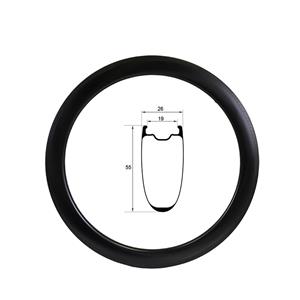
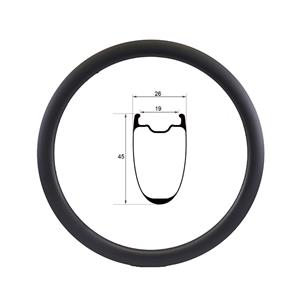
| Rim profile | Depth, external width, and tire interface | Affects aerodynamics and compatibility |
| Hub interface | Axle dimensions, spacing, and bearing configuration | Ensures correct installation |
| Braking configuration | Track-specific, rim-brake, or disc-brake version | Prevents component mismatch |
| Complete wheel weight | Measured weight including specified components | Allows meaningful product comparisons |
| Lateral stiffness | Test method and measured deflection | Helps assess structural performance |
| Impact resistance | Applicable test standard and test documentation | Supports safety and compliance evaluation |
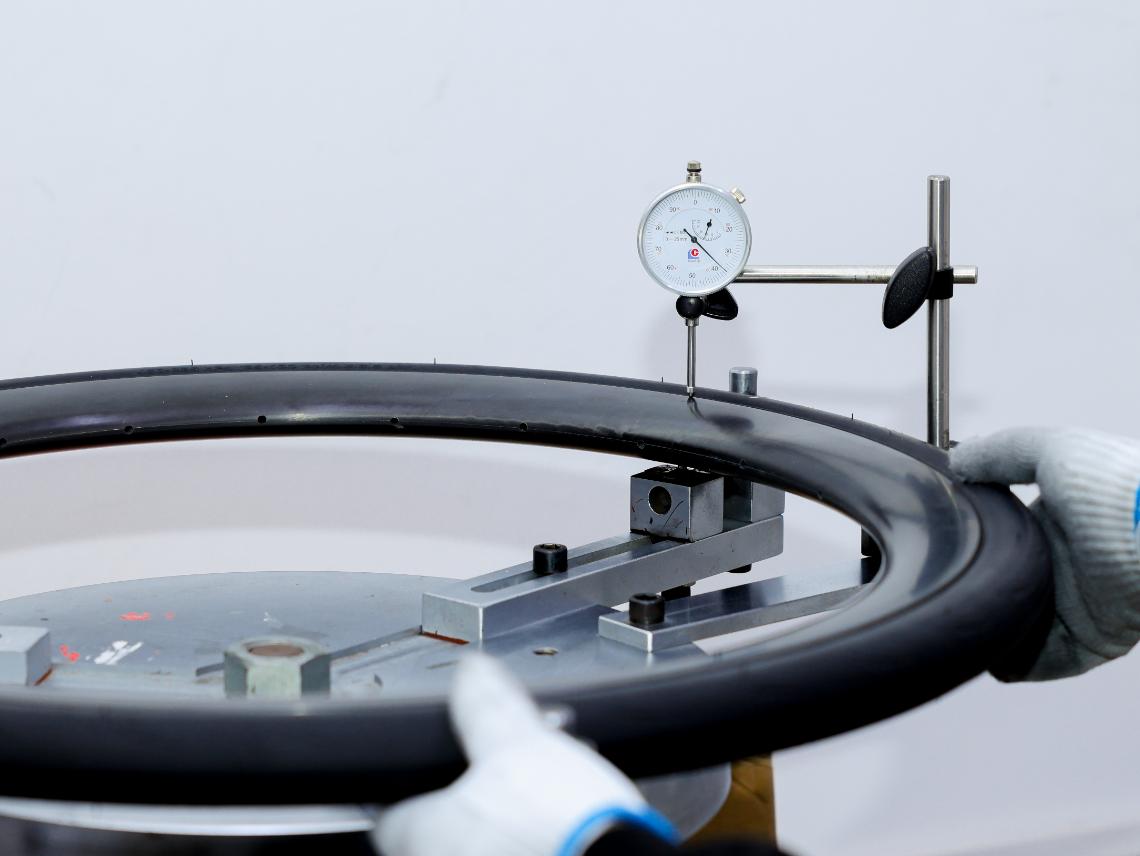
| Runout and roundness | Radial and lateral dimensional tolerances | Supports smooth rotation and assembly quality |
| Surface finish | Matte, gloss, decals, and logo requirements | Maintains brand consistency |
| Competition approval | Applicable UCI approval status | Determines eligibility for regulated events |
4.1 Weight: Compare Complete Wheels, Not Just Carbon Components
A quoted carbon disc weight may refer to the bare composite structure rather than the complete wheel.
For accurate comparison, buyers should confirm whether the specification includes the hub, bearings, axle components, valves, and other parts.
A complete wheel weight should be measured using a clearly defined configuration.
4.2 Stiffness: Ask for Test Methods
A wheel's stiffness should not be judged by hand pressure or subjective descriptions.
For professional procurement, buyers can request information about lateral deflection, radial deformation, and structural testing under defined loading conditions.
The test method, loading direction, support arrangement, and measurement units should be documented. This allows different samples and production batches to be compared more objectively.
4.3 Impact Resistance and Structural Reliability
Carbon composite wheels must be designed and evaluated for their intended use.
Impact resistance is particularly important because a wheel may experience localized loads during handling, transport, installation, or racing incidents.
For non-standard wheels intended for UCI competition, the relevant impact-test requirements and approval process should be checked before production is finalized.
Manufacturers should not substitute general internal quality checks for the specific evidence required by the applicable competition rules.
5. Braking Surface: Track Disc Wheels vs. Road TT Disc Wheels
One frequent source of confusion in carbon wheel procurement is the term "braking surface."
A track-specific disc wheel and a road TT disc wheel may look similar, but their braking requirements can be completely different.
Track-Specific Configuration
Most track racing bicycles do not use conventional braking systems. A track-specific disc wheel therefore does not necessarily require a rim braking surface.
Its design focuses on the track hub interface, tire compatibility, structural performance, aerodynamic profile, and competition requirements.
Rim-Brake Road TT Configuration
A rim-brake road TT disc wheel requires a braking track compatible with the intended brake pads.
For carbon braking surfaces, buyers should confirm:
Braking track material and construction
Compatible brake-pad specifications
Heat-management considerations
Surface uniformity
Manufacturer's braking and tire-pressure limits
Braking performance and heat resistance should be validated for the complete wheel and brake system.
Disc-Brake Road TT Configuration
A disc-brake road TT wheel uses a hub designed for the appropriate rotor interface.
Buyers should confirm rotor mounting type, axle standard, frame compatibility, and clearance requirements.
The absence of a rim braking track does not remove the need for structural and thermal considerations around the hub and rotor interface.
Procurement note: Do not assume that a road TT disc wheel with a braking track is automatically suitable for track racing, or that a track-specific disc wheel can be installed on every road TT bicycle.
6. UCI Compliance: What Must Be Checked Before Track Competition?
For buyers targeting UCI events, competition compliance should be treated as a core product requirement rather than a final administrative check.
Under UCI Cycling Regulations, wheel designs used in road, track, and cyclo-cross disciplines are subject to prior approval requirements, except for wheels that meet the defined traditional-wheel criteria.
This is especially relevant to carbon disc wheels because they are generally non-traditional wheel designs.
The UCI technical requirements and approval process should be reviewed against the exact wheel model, not just the manufacturer's product category.
6.1 Wheel Design Approval
Buyers should confirm whether the exact wheel design appears on the applicable UCI list of approved equipment or has the required approval documentation.
Approval should not be assumed to transfer automatically between different wheel models, sizes, constructions, or configurations.
If a manufacturer changes the structural design or specifications, the effect on approval status should be checked.
6.2 Impact Test Requirements
The UCI's wheel approval requirements include impact-test provisions for non-traditional wheels, with reference to the relevant requirements of ISO 4210-2:2023.
Manufacturers and buyers should verify the applicable test procedure and documentation for the intended wheel design.
A general statement that a product has passed factory inspection is not equivalent to evidence of compliance with the required approval process.
6.3 Front Disc Wheel Restrictions
The UCI regulations specify that, in track competition including motor-pacing, the use of a front disc wheel is only permitted in specialties against the clock.
This distinction is important for teams purchasing equipment for multiple track disciplines.
A wheel configuration suitable for an individual pursuit or another time-based specialty may not be permitted in a mass-start event.
6.4 Responsibility for Competition Eligibility
Teams and riders should verify that the equipment they intend to use meets the current rules for the specific event.
Distributors and OEM buyers should request the relevant approval information before placing large production orders.
For the latest technical requirements, consult the official UCI regulations and equipment approval information.
7. Application Scenarios for Custom Carbon Track Bike Wheels
Different racing applications require different wheel configurations and procurement priorities.
7.1 Individual Pursuit
Individual pursuit is a time-based event in which riders aim to maintain a high average speed over a fixed distance.
Aerodynamic performance, structural reliability, and predictable handling are important considerations.
A carbon disc wheel can be a suitable option for a pursuit setup when the exact configuration meets the applicable UCI requirements.
7.2 Team Pursuit
Team pursuit requires riders to maintain coordinated speed and positioning while working together as a unit.
Wheel selection should consider aerodynamic performance, structural consistency, and the specific equipment requirements of the team.
For team procurement, matching specifications and repeatable manufacturing quality are particularly important.
7.3 Track Time Trial Events
Shorter time-based events place strong demands on acceleration and sustained power output.
A wheel should be selected according to the event regulations, rider preference, and the overall bicycle configuration.
Front and rear wheel choices should be assessed independently, especially where front disc restrictions apply.
7.4 Cycling Brand and Distributor Product Lines
For distributors and bicycle brands, custom carbon track bike wheels can help create a differentiated product range.
OEM projects may involve:
Private-label branding
Customized surface finishes
Selected hub configurations
Wheel size and profile requirements
Product packaging
Batch production planning
Technical documentation for buyers
A clearly defined specification helps reduce misunderstandings during sampling and mass production.
8. How Should Distributors and Teams Evaluate a Carbon Disc Wheel Supplier?
Selecting a wheel manufacturer is not simply a matter of comparing quoted prices.
For professional teams and distributors, supplier evaluation should cover engineering capability, manufacturing control, quality documentation, and communication efficiency.
8.1 Review Composite Manufacturing Experience
Ask whether the supplier has experience with carbon fiber bicycle components and composite structural products.
Relevant questions include:
What carbon fiber materials are used?
How are the laminate structures designed and controlled?
What molding and curing processes are available?
How are bonding areas inspected?
How are production defects identified and managed?
The supplier should be able to explain the manufacturing process in a technically meaningful way.
8.2 Request Product-Specific Quality Records
A professional supplier should be able to define the inspection items for the proposed product.
Depending on the wheel design, these may include:
Dimensional and profile inspection
Radial and lateral runout checks
Weight consistency
Surface and bonding inspection
Structural test records
Impact-test documentation
Batch traceability
Buyers should distinguish between routine factory inspections, engineering validation tests, and formal regulatory approval evidence.
8.3 Evaluate Sample-to-Batch Consistency
A sample wheel may meet the requested specifications, but mass production requires repeatability.
Before confirming a large order, buyers should agree on:
Approved sample specifications
Critical dimensional tolerances
Weight tolerance
Surface finish acceptance criteria
Inspection frequency
Packaging and transport protection
Procedures for handling non-conforming products
This is particularly important for teams and distributors that need to reorder the same product over multiple seasons.
8.4 Confirm OEM and ODM Communication
A reliable OEM partner should be able to clarify technical requirements before production begins.
Buyers should provide target wheel applications, intended event types, frame and hub compatibility, expected quantities, branding requirements, and any competition approval targets.
The manufacturer can then assess the feasibility of the proposed configuration and identify any engineering or compliance issues.
9. Xiamen Trips Sporting Goods Co.,Ltd: Composite Manufacturing and OEM Cooperation
Developing a high-performance carbon wheel requires coordinated work across material selection, product design, composite processing, inspection, and final assembly.
Xiamen Trips Sporting Goods Co.,Ltd is an integrated enterprise engaged in the R&D, design, production, manufacturing, sales, and service of carbon fiber and various composite materials.
For cycling brands, distributors, and professional team buyers, Trips provides a manufacturing partner for discussing carbon bicycle rim and wheel projects.
Potential project requirements can include:
Carbon wheel and rim product development
Custom dimensions and aerodynamic profiles
Composite material and structural design discussions
Surface finish and private-label branding
OEM and ODM manufacturing cooperation
Sample evaluation and specification confirmation
Production planning for wholesale and team orders
For a carbon TT disc wheel project, buyers should define the intended racing discipline, wheel position, hub interface, tire compatibility, target weight, stiffness requirements, and applicable UCI approval needs before finalizing the specification.
For custom products, the most effective approach is to establish measurable acceptance criteria at the beginning of the project. This helps align product development, sample evaluation, and mass production.
Trips welcomes inquiries from overseas cycling brands, distributors, and professional teams seeking to develop custom carbon track bike wheels and other composite cycling products.
10. Frequently Asked Questions
What makes a carbon TT disc wheel suitable for UCI track competition?
A suitable wheel must meet the applicable structural, dimensional, compatibility, and UCI approval requirements. Aerodynamic design alone does not establish competition eligibility. Buyers should verify the approval status of the exact wheel model and its intended event use.
Are carbon disc wheels allowed in all UCI track events?
No. UCI regulations restrict the use of a front disc wheel in track competition to specialties against the clock. Other event-specific equipment requirements must also be checked before competition.
Do track carbon disc wheels need a braking surface?
Not necessarily. Track bicycles generally do not use conventional braking systems, so track-specific disc wheels do not necessarily require a rim braking track. Road TT disc wheels may require a braking surface if they are designed for rim brakes.
Why is carbon fiber layup important for disc wheels?
Carbon fiber layup determines the direction and distribution of reinforcement within the composite structure. It influences stiffness, strength, weight, and the wheel's ability to withstand repeated loading.
What should distributors request from a carbon wheel manufacturer?
Distributors should request complete technical specifications, material information where available, inspection records, structural test documentation, applicable UCI approval information, production tolerances, and OEM customization details.
Can carbon track disc wheels be customized for OEM orders?
OEM projects may include branding, surface finishes, selected dimensions, component configurations, and packaging requirements, subject to engineering feasibility and the relevant approval process. Buyers should provide their target application and estimated order quantity for evaluation.
Conclusion: Performance and Compliance Must Work Together
A high-quality carbon TT disc wheel is the result of more than an aerodynamic outer shape. Carbon fiber layup, resin system, structural design, hub integration, manufacturing consistency, and quality inspection all contribute to its performance and reliability.
For UCI track racing, competition compliance is equally important. A wheel must meet the applicable approval requirements and be permitted for the specific event in which it will be used.
For distributors, professional teams, and cycling brands, the best purchasing decision combines verified technical specifications, reliable manufacturing, clear approval documentation, and consistent OEM support.
If your business is sourcing custom carbon track bike wheels or developing a new UCI track racing wheel product line, contact Xiamen Trips Sporting Goods Co.,Ltd to discuss your project specifications, customization requirements, and manufacturing plans.