Are 3-Spoke Carbon Track Wheels the Fastest Aero Upgrade for Time Trial Racing?
When every second matters, wheel selection can make a measurable difference to a time trial or track racing setup. Riders often compare three-spoke carbon wheels, conventional spoked wheels, and full disc wheels because each design manages airflow, structural loads, and crosswinds differently.
So, are 3 spoke carbon track wheels the fastest aerodynamic upgrade for time trial racing?
The short answer is: they can be an excellent aerodynamic option, but they are not automatically faster than a carbon TT disc wheel. A disc wheel generally has an aerodynamic advantage in many low-yaw conditions, while a three-spoke design offers a different balance of aerodynamic performance, structural layout, and practical handling. The best choice depends on whether the wheel is used at the front or rear, the expected wind conditions, the event format, and the rider's ability to control the bike.
For cycling brands, professional teams, and wholesale buyers, understanding these differences is essential before selecting a time trial aero wheel for a product range or racing program.
1. Why Do Time Trial Riders Choose Three-Spoke Carbon Wheels?
In time trial racing, aerodynamic drag is one of the major forces a rider must overcome. As speed increases, aerodynamic resistance becomes increasingly important. The wheel is also a rotating component exposed to airflow from changing directions, so its performance cannot be judged only by looking at its shape from the front.
A conventional spoked wheel has multiple individual spokes. These create airflow disturbances as the wheel rotates. A three-spoke wheel replaces many thin spokes with three wider, aerodynamically shaped carbon blades.
This design offers several potential advantages:
Reduced spoke-related airflow interference: Three broad blades can create a cleaner aerodynamic profile than a conventional wheel with many exposed spokes.
Integrated structural layout: The spokes and rim form a unified load-bearing structure, allowing designers to control blade shape, thickness, and connection geometry.
Distinctive racing appearance: The three-spoke profile is recognizable and often associated with track and time trial equipment.
Potentially competitive aerodynamic performance: Wind-tunnel research has found that aerodynamic spoke wheels can approach disc-wheel performance, although results depend on the specific wheel design and test conditions.
However, fewer spokes do not automatically mean less drag. Blade thickness, spoke curvature, rim depth, hub design, tire width, and the interaction between the wheel and bicycle frame all influence the final aerodynamic result.
For this reason, a well-designed three-spoke wheel should be evaluated as a complete aerodynamic structure rather than simply as a wheel with fewer spokes.

2. Three-Spoke Wheels vs. Carbon TT Disc Wheels vs. Conventional Spoked Wheels
There is no single wheel design that is fastest in every racing environment. Each configuration has a different aerodynamic and handling profile.
Three-Spoke Carbon Wheels
A three-spoke wheel uses three large carbon blades connecting the hub to the rim. Its open structure is different from both a conventional spoked wheel and a solid disc.
For time trial and track applications, the main attraction is the combination of aerodynamic shaping and an integrated composite structure. The blades can be designed with airfoil-inspired sections to manage airflow while maintaining the required stiffness.
A three-spoke wheel may be particularly attractive when a team wants an aerodynamic front-wheel option without using a full disc configuration. Nevertheless, its crosswind behavior must be assessed carefully, especially when used on the front wheel.
Carbon TT Disc Wheels
A disc wheel has a continuous or near-continuous side surface between the hub area and the rim. By reducing the open spaces found in conventional spoke designs, it can reduce airflow disturbance.
Wind-tunnel studies have often found disc wheels to have the lowest aerodynamic power losses among the tested wheel types under particular test conditions. However, a disc wheel can also generate substantial side force and steering moment when exposed to crosswinds.
For this reason, a rear disc wheel is a common time trial configuration, while front-wheel selection requires more attention to wind exposure and rider control.
Conventional Spoked Aero Wheels
A conventional aero spoked wheel uses multiple spokes, often with flattened or bladed profiles, combined with a deep-section rim.
Its main advantages are a familiar construction, replaceable spokes in many designs, and a wide range of available configurations. It may also offer a more manageable handling profile than some solid or large-blade designs, depending on the rim and spoke geometry.
For teams that need versatile equipment for different courses and weather conditions, a conventional aero spoked wheel can remain a practical choice.
Comparison Table
| Evaluation factor | Three-spoke carbon wheel | Carbon TT disc wheel | Conventional aero spoked wheel |
|---|---|---|---|
| Aerodynamic structure | Three shaped carbon blades | Continuous or near-continuous side surface | Multiple individual spokes |
| Aerodynamic potential | High, design-dependent | Often lowest drag in suitable conditions | Varies with spoke and rim design |
| Crosswind response | Depends on blade area and profile | Can produce significant side force and steering moment | Depends on spoke count, rim depth, and profile |
| Lateral stiffness | Depends on blade geometry and layup | Depends on disc construction and hub interface | Depends on spoke tension, count, and rim |
| Maintenance | Specialized inspection and repair may be required | Specialized inspection and repair may be required | Individual spokes may be replaceable |
| Typical buying consideration | Aero performance and handling balance | Maximum aerodynamic focus, especially at the rear | Versatility and serviceability |
The table describes general design characteristics, not guaranteed performance rankings. Actual drag and handling must be measured on the specific wheel model.
3. What Determines the Aerodynamic Performance of 3-Spoke Carbon Track Wheels?
The aerodynamic performance of a three-spoke wheel is influenced by more than the number of blades. Buyers should examine the following engineering factors.
3.1 Blade Shape and Frontal Area
The three carbon blades are the most visible feature of the wheel. Their cross-sectional profile, thickness distribution, leading-edge shape, and connection to the rim affect how air moves around the wheel.
A carefully designed blade profile can help reduce unnecessary airflow separation. However, increasing blade width or surface area may also increase the force generated by crosswinds.
This creates a design trade-off: the goal is not simply to make the blades as wide or as narrow as possible, but to achieve a suitable balance between aerodynamic drag, structural strength, and handling.

3.2 Rim Depth and Rim Profile
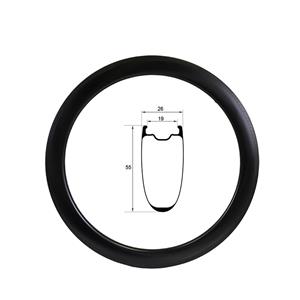
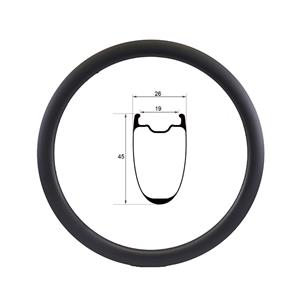
Rim depth influences the wheel's aerodynamic characteristics and its interaction with the tire.
A deeper rim can help manage airflow around the wheel, but it may also increase the side area exposed to crosswinds. The rim profile should therefore be evaluated together with the blade design rather than as an isolated specification.
For OEM and ODM projects, buyers should confirm:
Overall rim depth and external width
Internal width and tire compatibility
Rim-to-blade transition geometry
Tire installation requirements
Brake-system configuration, where applicable
The selected dimensions should match the intended frame, fork, tire, and event requirements.
3.3 Rotational Aerodynamics
A bicycle wheel is not a stationary object in the airflow. It rotates while moving forward, and this rotation changes the flow around the spokes or blades.
Research on bicycle-wheel aerodynamics has shown that wheel rotation can influence measured drag. Therefore, a static wind-tunnel test alone may not fully represent the conditions experienced during racing.
When comparing a three-spoke wheel with a disc or spoked wheel, buyers should ask whether the test method accounts for wheel rotation and whether the test setup represents the complete bicycle or an isolated wheel.
3.4 Yaw Angle and Crosswind Performance
Yaw angle describes the angle between the apparent airflow and the bicycle's direction of travel. In real racing, the airflow is not always directly head-on. Roadside exposure, wind direction, rider speed, and course layout can all change the effective yaw angle.
A wheel that performs well at zero yaw may behave differently when the wind comes from the side.
For three-spoke carbon wheels, the blade surfaces interact with crosswind in a way that differs from conventional spokes. A disc wheel presents an even more continuous surface to the airflow. Both can generate side force and steering effects.
Buyers should therefore look beyond a single drag figure and request aerodynamic data across a range of yaw angles, where available.

4. Lateral Stiffness: Why Does It Matter in Track and Time Trial Racing?
Aerodynamics is only one part of wheel performance. Lateral stiffness is also important, particularly when riders accelerate hard, sprint out of corners, or apply high torque during track racing.
A three-spoke carbon wheel uses three structural blades rather than many tensioned spokes. The blade geometry, carbon fiber orientation, hub connection, and rim interface all contribute to the wheel's overall stiffness.
A properly engineered composite structure can provide a direct load path between the hub and rim. However, it would be inaccurate to assume that every three-spoke wheel is stiffer than every conventional spoked wheel. Actual stiffness depends on the complete structure and manufacturing quality.
For team procurement, useful evaluation points include:
Lateral deflection under a defined load
Radial stiffness and deformation
Hub-to-blade connection strength
Rim roundness and dimensional consistency
Fatigue resistance under repeated loading
Consistency between production batches
A wheel should be stiff enough for its intended racing application without becoming unnecessarily heavy or compromising impact resistance.
5. Crosswind Stability: Is a Three-Spoke Wheel Easier to Control?
Crosswind stability is one of the most important considerations when choosing a front time trial aero wheel.
A wheel generates aerodynamic side force when the apparent wind approaches from an angle. This force can affect the rider's steering, particularly when it acts at the front wheel. The resulting steering moment depends on the wheel's aerodynamic profile, the location of the aerodynamic force, the bicycle geometry, and the wind conditions.
A three-spoke wheel has three broad blades, so its crosswind response can differ significantly from that of a conventional spoked wheel. A disc wheel has a more continuous side surface and can generate substantial steering effects at certain yaw angles.
This does not mean that a three-spoke wheel is always more stable than a disc wheel. Nor does it mean that a conventional spoked wheel is automatically safer. The actual result depends on the complete wheel design and the conditions in which it is used.
Before selecting a front wheel, teams should consider:
Course exposure: Is the course sheltered, open, coastal, or exposed to changing wind directions?
Rider experience: Can the rider maintain a stable aero position while handling gusts?
Wheel position: Is the wheel intended for the front or rear?
Speed range: How does the wheel behave at the speeds expected during the event?
Testing evidence: Are drag, side force, and steering moment data available across relevant yaw angles?
For exposed courses and unpredictable wind conditions, handling confidence should be treated as a performance requirement, not an optional comfort feature.
6. Technical Parameters Buyers Should Check Before Ordering
When sourcing 3 spoke carbon track wheels, buyers should evaluate the complete specification rather than focusing only on wheel weight or rim depth.
The following table can be used as a procurement checklist for OEM, team, and wholesale projects.
| Parameter | What buyers should confirm | Why it matters |
|---|---|---|
| Wheel size | Intended diameter and frame compatibility | Ensures correct fit |
| Wheel position | Front, rear, or matched pair | Changes handling and aerodynamic requirements |
| Blade configuration | Three-blade geometry and profile | Influences airflow and structural behavior |
| Rim depth | Exact depth in millimeters | Affects aerodynamic behavior and crosswind exposure |
| External width | Maximum rim width | Affects tire and frame clearance |
| Internal width | Tire compatibility | Influences tire fit and system setup |
| Carbon construction | Fiber grade, layup design, and resin system | Affects strength, stiffness, and weight |
| Wheel weight | Complete wheel weight, not only rim weight | Supports realistic equipment comparisons |
| Hub interface | Axle, bearing, and mounting compatibility | Ensures correct installation |
| Brake configuration | Track-specific or road/TT brake requirements | Determines system compatibility |
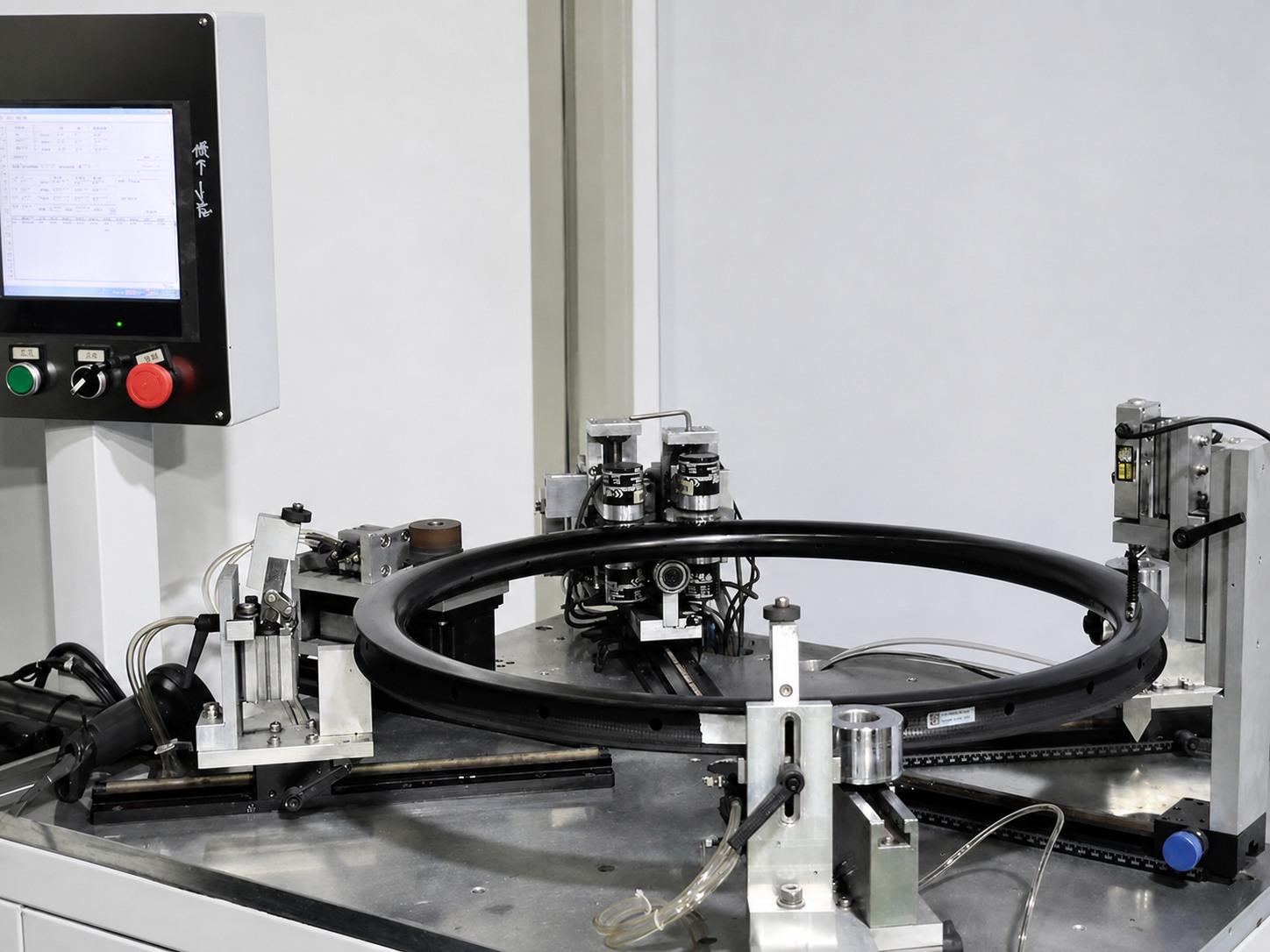
| Quality inspection | Runout, balance, dimensional checks, and structural testing | Helps control production consistency |
| Compliance | Applicable UCI and event requirements | Reduces competition-use risks |
Do Not Compare Rim Weight with Complete Wheel Weight
A common purchasing mistake is comparing the weight of a carbon rim with the weight of a complete wheel. These are different measurements.
A complete wheel includes the rim, hub, blades or spokes, bearings, and other required components. Buyers should request a clearly defined weighing method and confirm whether the quoted figure refers to a bare rim, front wheel, rear wheel, or complete wheelset.
Check Competition Regulations Before Bulk Purchasing
Competition eligibility should be confirmed before placing a large order.
Under the UCI regulations, wheel designs used in road and track disciplines are subject to applicable approval and technical requirements. The rules also distinguish between different wheel configurations and event types. For example, the use of a front disc wheel in track competition is restricted to specialties against the clock.
A three-spoke wheel should not be assumed to be eligible for every event simply because it is an aerodynamic design. Teams and distributors should verify the current UCI technical regulations, the relevant approved-wheel status, and the specific event rules before purchase.
7. Which Applications Are Best for Three-Spoke Carbon Wheels?
Three-spoke carbon wheels are designed for riders and teams seeking an aerodynamic wheel configuration with a distinctive composite structure.
Potential applications include:
Track Time Trial Events
In individual pursuit and other applicable time-based track events, aerodynamic performance is a major equipment consideration. A three-spoke front wheel may be considered as part of a complete racing setup, subject to event regulations and rider handling requirements.
Road Time Trial Setups
For road time trials, wheel selection should reflect the course profile, wind exposure, and the rider's position. A three-spoke front wheel may suit certain conditions, while a rear disc wheel may be selected for its aerodynamic characteristics.
The fastest combination should be evaluated as a complete bicycle system rather than by comparing individual wheels in isolation.
Triathlon and Specialized Racing Equipment
Triathlon athletes often prioritize aerodynamic efficiency over long periods at relatively high speeds. A suitable front wheel and rear wheel combination can contribute to a more aerodynamic setup, but crosswind handling and event rules remain important.
Cycling Brands and Professional Team Projects
For brands developing specialist racing products, three-spoke wheels can provide a differentiated product option. Teams may also require customized specifications, graphics, hub configurations, or testing documentation to meet their equipment programs.
8. How Should Buyers Make the Final Choice?
The right wheel depends on the priority of the project. The following decision guide can help buyers narrow down the options.
| Buyer priority | Wheel option to evaluate | Key consideration |
|---|---|---|
| Aerodynamic performance in suitable conditions | Carbon TT disc wheel | Drag performance and crosswind steering effects |
| Aero profile with three structural blades | Three-spoke carbon wheel | Blade design, stiffness, and handling |
| More versatile serviceability | Conventional aero spoked wheel | Spoke replacement and maintenance |
| Front-wheel use on exposed courses | Three-spoke or spoked aero wheel | Side force, steering moment, and rider control |
| Rear-wheel aerodynamic setup | Disc or three-spoke wheel | Course conditions, regulations, and system compatibility |
| OEM product differentiation | Custom three-spoke carbon design | Tooling, layup, specifications, and batch consistency |
A useful purchasing process should include three steps.
First, define the racing application. Confirm whether the wheel is intended for track time trials, road time trials, or triathlon. Identify the front or rear position, target tire, frame compatibility, and applicable competition rules.
Second, evaluate performance evidence. Request aerodynamic data where available, including drag across relevant yaw angles. For front wheels, ask about side force and steering moment. Also review stiffness, impact resistance, and production inspection records.
Third, confirm manufacturing consistency. For team orders and wholesale supply, one good sample is not enough. Buyers should check whether the factory can maintain dimensions, weight tolerances, finish quality, and structural performance across repeated production batches.
9. How Xiamen Trips Sporting Goods Co.,Ltd Supports Carbon Wheel Projects
For a carbon wheel brand or professional team, selecting a wheel design is only the beginning. The manufacturing partner must also understand composite materials, structural design, production control, and the requirements of different cycling applications.
Xiamen Trips Sporting Goods Co.,Ltd is an integrated enterprise covering R&D, design, production, manufacturing, sales, and service for carbon fiber and various composite materials.
For carbon bicycle rim and wheel projects, buyers can discuss product requirements such as:
Three-spoke carbon wheel concepts for specialized racing applications
Carbon rim dimensions and profile customization
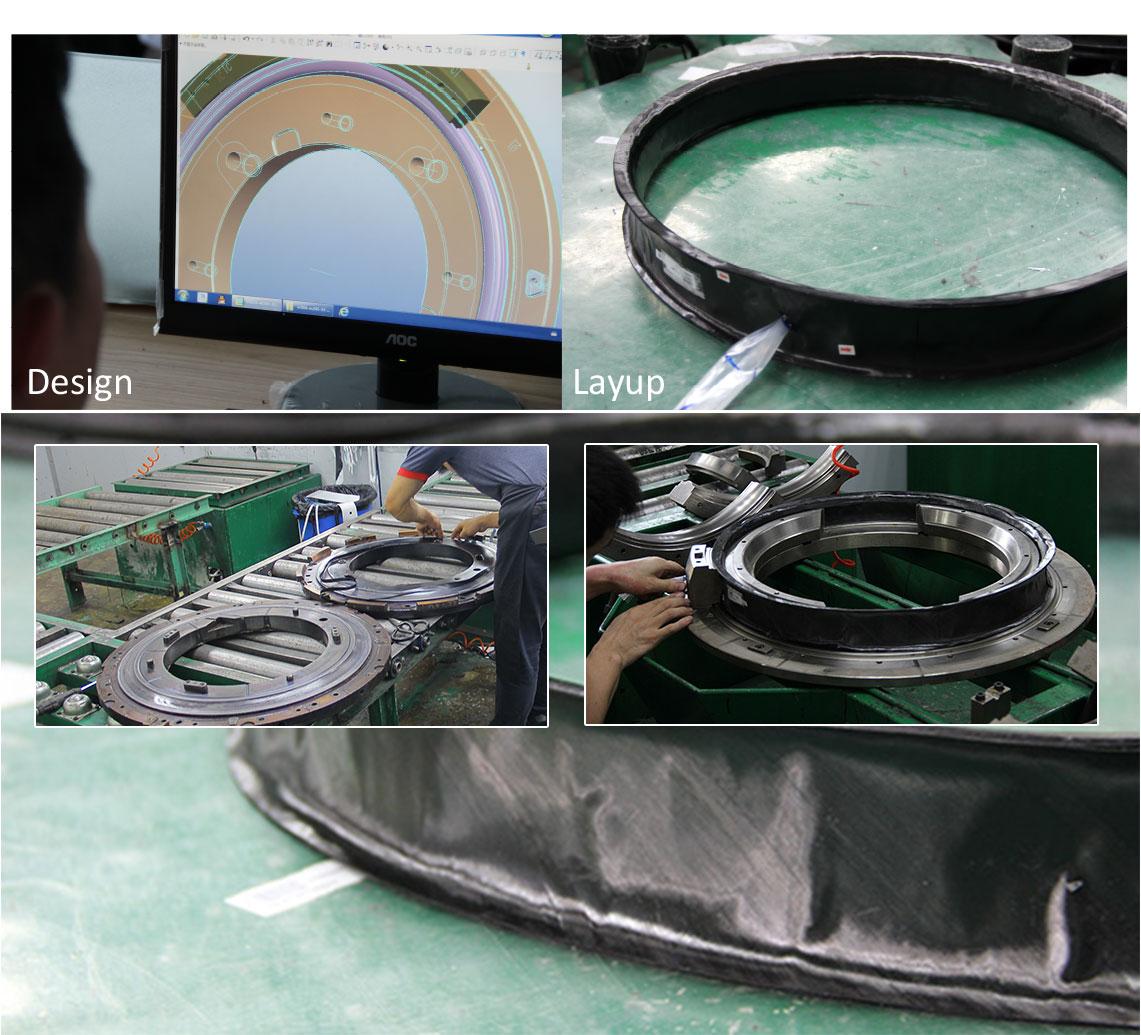
Carbon fiber layup and structural design requirements
Wheel weight and stiffness targets
Surface finish, decals, and private-label branding
OEM and ODM cooperation for cycling brands and distributors
Sample evaluation and production specification confirmation
For professional procurement, it is important to define measurable requirements before mass production. These may include dimensional tolerances, target weight, lateral stiffness, impact-test requirements, finish standards, and batch inspection procedures.
Rather than choosing a wheel based only on its appearance or a single aerodynamic claim, buyers should work with the manufacturer to confirm the intended use, technical specifications, and quality acceptance criteria.
If your brand is developing a new 3 spoke carbon track wheels product line or sourcing a specialized time trial aero wheel, Trips can discuss your project requirements and manufacturing expectations.
10. Frequently Asked Questions
Are three-spoke carbon wheels faster than disc wheels?
Not necessarily. Wind-tunnel research has found that disc wheels can achieve lower aerodynamic power losses than aerodynamic spoke wheels under certain test conditions. However, actual performance depends on yaw angle, wheel rotation, tire selection, and the complete bicycle setup. A three-spoke wheel may still be a suitable option when handling, configuration, or product requirements favor that design.
Are three-spoke wheels good for front-wheel use?
They can be considered for front-wheel applications, but crosswind behavior must be evaluated carefully. The wheel's side force and steering moment can affect handling. Riders should test the wheel under realistic conditions and follow the event's equipment rules.
Is a carbon TT disc wheel always the best rear-wheel choice?
A rear disc wheel is a strong aerodynamic option for many time trial applications. However, the final choice should consider course conditions, regulations, compatibility, handling, and the rider's overall equipment setup.
What is more important: aerodynamic drag or lateral stiffness?
Both matter. Low aerodynamic drag helps reduce resistance at speed, while adequate lateral stiffness supports predictable wheel behavior under high loads. A racing wheel should achieve an appropriate balance rather than maximizing one parameter at the expense of the other.
What should wholesale buyers request from a carbon wheel manufacturer?
Buyers should request complete specifications, wheel weight definitions, material and layup information where available, dimensional inspection records, structural test information, compatibility details, and relevant competition-compliance documentation. For repeat orders, production tolerances and batch consistency should also be agreed in advance.
Can three-spoke carbon wheels be customized for OEM projects?
OEM customization may include wheel dimensions, blade profiles, surface finishes, logos, and selected component configurations, subject to engineering feasibility and tooling requirements. Buyers should provide the target application, expected performance requirements, and estimated order quantity for an accurate project assessment.
Conclusion: Choose the Wheel for the Course, Not Just the Shape
Three-spoke carbon wheels offer an attractive combination of aerodynamic shaping and integrated composite construction. They can be a competitive option for specialized track and time trial applications, but they are not universally faster than a full disc wheel.
A carbon TT disc wheel may offer a lower-drag solution in suitable conditions, while a three-spoke design can provide a different balance of aerodynamic performance, structural layout, and handling characteristics. Conventional aero spoked wheels remain relevant where versatility and serviceability are priorities.
For riders, teams, and cycling brands, the best time trial aero wheel is the one that performs effectively under the actual racing conditions, fits the bicycle correctly, meets competition requirements, and delivers consistent manufacturing quality.
Looking for a carbon wheel manufacturing partner for your next racing product? Contact Xiamen Trips Sporting Goods Co.,Ltd to discuss your carbon wheel specifications, OEM requirements, and project plans.