What Quality Tests Matter When Buying Triathlon 88mm Aero Carbon Tubular Rims?
For bicycle brands, wholesale distributors, and triathlon equipment suppliers, buying an 88mm aero carbon tubular rim involves much more than comparing rim depth, weight, and unit price.
A deep-section carbon rim must maintain its structural integrity under repeated riding loads, resist damage from impacts, retain accurate geometry, and provide a reliable interface for the intended tubular tire system. For high-end products, carbon fiber layup, molding consistency, dimensional inspection, and documented testing all influence the final wheel's quality.
This raises an important purchasing question: What quality tests should you request before choosing a carbon tubular rim manufacturer for your triathlon wheel product line?
For buyers sourcing 88mm aero carbon rims, the answer involves several layers of verification: structural testing, heat-resistance evaluation where applicable, roundness and runout measurement, carbon composite process control, and tubular tire installation procedures.
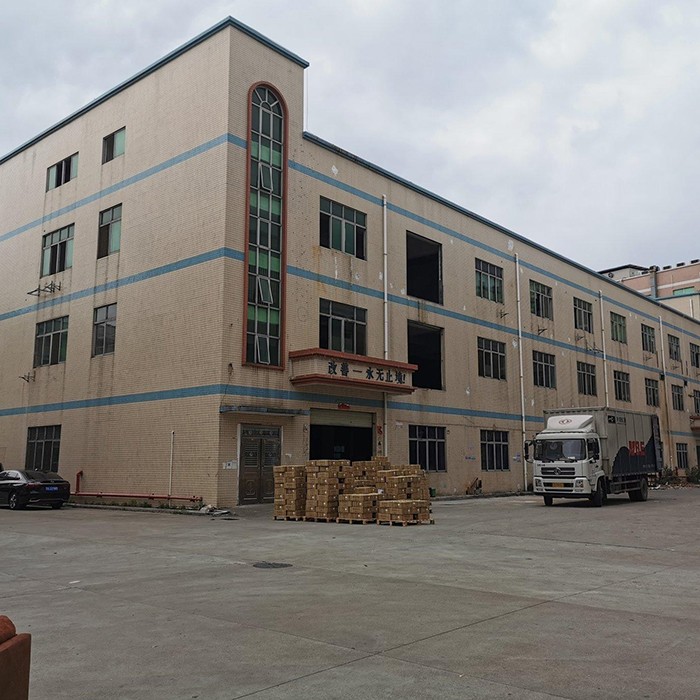
Xiamen Trips Sporting Goods Co.,Ltd integrates research and development, design, production, manufacturing, sales, and service for carbon fiber and composite-material products. This article provides a practical framework for evaluating suppliers and developing a more reliable triathlon carbon wheel purchasing process.
1. The User Problem: Why Is Rim Quality Testing Important?
An 88mm deep-section rim is designed for performance-oriented applications, including triathlon and time-trial wheelsets. Its tall profile provides opportunities for aerodynamic shaping, but the finished product must also meet the structural and dimensional requirements of its intended use.
For overseas bicycle brands and distributors, an inconsistent rim can create several problems:
Cracks or structural damage during service
Excessive radial or lateral runout
Inconsistent rim weight between production batches
Poor tire-to-rim compatibility
Difficult or unreliable wheel assembly
Delays caused by inspection failures and product returns
Increased after-sales costs and warranty exposure
These risks cannot be assessed through a product photograph or a single advertised specification.
A professional supplier evaluation should examine three areas:
Product performance: Does the rim meet the requirements for its intended application?
Manufacturing consistency: Can the factory reproduce the approved specification across multiple batches?
Documented verification: Can the supplier provide relevant test procedures, inspection records, and product-specific results?
For B2B buyers, the objective is not to demand the largest possible number of tests. It is to identify the tests that address the actual failure risks of the product being purchased.

2. Product Selection: What Should You Check Before Ordering an 88mm Carbon Tubular Rim?
Before evaluating test results, confirm that the rim itself matches your target wheel system.
2.1 Confirm the Rim and Tire Interface
A tubular rim is designed for a tubular tire, whose construction and mounting method differ from those of clincher and tubeless-ready tires.
Buyers should confirm:
Wheel size
Rim depth
Internal and external dimensions
Tubular tire compatibility
Brake-system configuration
Intended tire model and size
Maximum permitted tire pressure
Maximum recommended rider weight
Spoke-hole configuration
Approved adhesive or mounting system
The tire interface matters because a rim may pass its structural tests but still be unsuitable for the tire or wheel configuration intended by the buyer.
2.2 Distinguish Rim Testing From Complete-Wheel Testing
A carbon rim and a complete triathlon carbon wheel are not the same test article.
Rim-level testing can assess structural properties and dimensions. Complete-wheel testing may additionally involve the hub, spokes, spoke tension, wheel truing, tire installation, and the assembled wheel's behavior under specified loads.
ISO 4210-7:2023 specifies wheel and rim test methods associated with ISO 4210-2. Buyers can use this standard as a reference when discussing applicable testing and documentation with a supplier. It should not be interpreted as automatic proof that a particular product has passed every relevant test. Official ISO standard.
For a triathlon carbon wheel, request evidence that corresponds to the actual product and configuration you intend to purchase.

3. Technical Parameters: Five Important Quality-Control Areas
3.1 Impact Testing: Can the Rim Withstand Unexpected Loads?
Impact testing evaluates how a rim responds to a defined impact condition. Depending on the test method, the setup may simulate an impact associated with an obstacle or a specified loading event.
For an 88mm deep-section rim, the buyer should understand how the test evaluates the rim structure, rather than assuming that greater depth automatically means greater strength.
Important questions include:
What impact-test method is used?
What energy level or loading condition is specified?
Is the test performed on the rim or a complete wheel?
Where is the impact applied?
What constitutes a pass or failure?
Are cracks, delamination, or permanent deformation assessed?
Does the test report identify the exact rim model?
The test method and acceptance criteria must be appropriate to the product and its intended use.
What buyers should request: A product-specific test report or documented test summary that identifies the model, test conditions, acceptance criteria, and outcome.
A supplier's general statement that its carbon rims are impact-resistant is less useful than evidence showing what was actually tested.
3.2 Heat-Resistance Testing: Does the Brake Configuration Matter?
Heat resistance is particularly relevant to carbon rims designed for rim-brake applications, where braking can transfer substantial heat into the braking surface.
A suitable evaluation may consider:
Temperature exposure
Braking conditions
Resin-system performance
Dimensional changes
Surface damage
Structural integrity after testing
Excessive heat can affect the resin matrix and potentially compromise the composite structure if the material system and braking conditions are not properly matched.
However, not every 88mm carbon tubular rim requires the same heat-resistance test.
For a disc-brake rim, the rim itself does not serve as the primary braking surface. Testing requirements should therefore reflect the actual design and relevant thermal exposures rather than copying a rim-brake test program without considering the configuration.
For a rim-brake product, ask the supplier for the applicable braking or thermal test method and the conditions under which the rim was evaluated.
For a disc-brake product, confirm which structural and environmental tests are relevant to the rim and complete wheel.
3.3 Roundness and Runout Calibration: Is the Rim Geometrically Accurate?
Dimensional accuracy is essential for consistent wheel assembly.
Two important measurements are:
Radial runout: Variation in the rim's radial position as it rotates.
Lateral runout: Side-to-side variation during rotation.
Roundness and runout are related but are not interchangeable measurements. A factory should define the inspection method and tolerance for each relevant parameter.
For complete wheels, runout can be affected by rim geometry, hub alignment, spoke tension, and wheel-building accuracy. Therefore, rim inspection and finished-wheel inspection should be distinguished.
A practical inspection program may include:
| Inspection Item | What It Evaluates | Why Buyers Care |
|---|---|---|
| Radial runout | Radial variation during rotation | Helps identify geometric inconsistency |
| Lateral runout | Side-to-side variation | Supports accurate wheel truing |
| Rim width and depth | Dimensional conformity | Confirms specification consistency |
| Spoke-hole position | Hole location and spacing | Supports correct wheel assembly |
| Valve-hole position | Position and finish | Helps ensure component compatibility |
| Rim weight | Variation from the approved target | Supports batch consistency |
| Surface inspection | Visible defects and finish quality | Helps identify cosmetic or manufacturing issues |
ISO 4210-7:2023 includes a rotational-accuracy test method for wheel-and-tire assemblies. Buyers should establish acceptance limits appropriate to the product category and applicable requirements rather than assuming one universal tolerance applies to every rim. ISO 4210-7:2023.
For wholesale orders, request the factory's actual dimensional tolerances and its procedure for handling nonconforming parts.
3.4 Carbon Fiber Layup Inspection: Is the Composite Structure Consistent?
Carbon fiber rims depend on more than the nominal fiber material.
The arrangement of the reinforcing layers, resin system, molding process, and local structural design determines how the composite responds to loads.
A layup inspection may focus on:
Fiber orientation
Layer sequence
Reinforcement around spoke holes
Rim-bed construction
Sidewall structure
Material traceability
Wrinkles or trapped foreign material
Resin distribution
Consistency with the approved manufacturing specification
The exact inspection method depends on the manufacturing process. Visual inspection can identify some surface or preform defects, while other internal defects may require appropriate nondestructive inspection or destructive sample testing.
For a deep-section rim, the goal is to ensure that the approved composite structure is reproduced consistently—not merely that the finished rim looks uniform.
Questions to ask a carbon tubular rim manufacturer:
How is the carbon layup specification controlled?
How are material batches identified?
How is the molding and curing process monitored?
How are internal defects assessed where required?
How are process deviations documented?
What happens when an inspection result falls outside the approved limits?
For OEM and private-label customers, process control is especially important because a customized specification must remain consistent after sample approval.
3.5 Tubular Tire Bonding and Installation: Is the Complete System Reliable?
For tubular products, tire mounting is a separate but important quality consideration.
A tubular tire is attached to a compatible rim using an approved adhesive or mounting system. The quality of this interface depends on the tire, rim surface, adhesive, preparation method, environmental conditions, and installation procedure.
Buyers should confirm:
Compatibility between the rim and tubular tire
Approved adhesive or mounting product
Required rim-surface preparation
Application and curing instructions
Environmental conditions during installation
Required curing time before use
Tire-retention verification procedures, where applicable
This distinction matters: a rim manufacturer's structural test does not automatically validate every tire-and-adhesive combination.
Similarly, a finished wheel's tire-retention evaluation does not prove that every installer will achieve the same result if the specified procedure is not followed.
For wholesale and team orders, document the approved installation procedure and communicate it to the mechanics or assembly partner responsible for preparing the wheel.
4. Application Scenarios: Which Tests Matter Most for Your Buyers?
Different customer groups need different evidence.
Triathlon and Time-Trial Wheel Buyers
For a dedicated race wheel, focus on:
Structural integrity
Appropriate impact testing
Dimensional accuracy
Tire compatibility
Tubular installation procedure
Brake-system-specific testing
Consistency of the approved specification
Aerodynamic claims should be evaluated separately. If a supplier describes a rim as wind-tunnel optimized, request relevant test evidence for the actual rim and tire configuration.
Bicycle Brands and OEM Customers
For a private-label product, repeatability is critical.
Prioritize:
Approved drawings and specifications
Carbon layup process control
Material traceability
Dimensional tolerances
Sample approval
Batch inspection records
Change-control procedures
If a rim depth, width, or layup specification changes after the sample is approved, the change should be documented and evaluated for its effect on performance and compliance.
Wholesale Distributors
Distributors need a process that makes incoming product verification practical.
Useful purchasing requirements include:
Clear model identification
Consistent technical datasheets
Defined quality tolerances
Sample inspection
Batch traceability where available
Packaging inspection
Warranty and after-sales procedures
These controls can help distributors compare suppliers and manage product quality across repeated orders.
5. Purchasing Decision: How Can You Evaluate a Carbon Tubular Rim Manufacturer?
A reliable sourcing decision combines technical evidence, factory capability, and commercial terms.
Use the following checklist when comparing potential suppliers.
| Evaluation Area | Questions to Ask | Evidence to Request |
|---|---|---|
| Impact performance | What impact method is used? | Relevant test report |
| Thermal performance | Is heat testing applicable to this brake design? | Test method and results |
| Geometry | What are the runout and dimensional tolerances? | Inspection records |
| Composite process | How is the layup specification controlled? | Process-control information |
| Tubular compatibility | Which tire and adhesive systems are approved? | Installation instructions |
| Production consistency | How are batches inspected? | Quality-control records |
| Customization | Can the logo, finish, or dimensions be modified? | Approved drawings and sample |
| Commercial capability | What are the MOQ and lead times? | Written quotation and schedule |
| After-sales support | How are defects and warranty claims handled? | Written warranty terms |
Do Not Compare Only the Unit Price
A lower quotation may not include the same testing scope, inspection documentation, customization, or quality-control requirements.
When comparing offers, establish a common specification first. Ask each supplier to quote against the same rim dimensions, tire interface, brake configuration, finish, logo requirements, and inspection criteria.
This makes the comparison more meaningful and reduces the risk of receiving products that look similar in a catalog but differ in important technical details.
6. Factory Solution: How Xiamen Trips Sporting Goods Co.,Ltd Supports Product Development
Xiamen Trips Sporting Goods Co.,Ltd is an integrated manufacturing enterprise covering research and development, design, production, manufacturing, sales, and service for carbon fiber and composite-material products.
For overseas bicycle brands, distributors, and OEM buyers, the value of working directly with a manufacturer lies in connecting product requirements with the manufacturing process.
Carbon Composite Manufacturing
Carbon rim development involves coordinating material selection, composite structure, molding, dimensions, and the final product specification.
For an 88mm aero carbon tubular rim, these considerations should be aligned with the intended wheel application and approved technical requirements.
A structured development process can include:
Reviewing the target wheel application
Confirming rim dimensions and tire interface
Establishing the required surface finish
Reviewing the relevant inspection and testing requirements
Approving a product sample
Confirming production specifications
Establishing batch inspection and acceptance criteria
The actual test scope should be confirmed for each model. Buyers should request the relevant evidence rather than assume every possible test is performed on every product.
Custom Logo and Surface Finish
For bicycle brands and distributors, visual differentiation can be important to product positioning.
Depending on the selected product and manufacturing capability, customization discussions may cover:
Brand logo
Decal design
Surface finish
Graphic placement
Product labeling
Packaging requirements
The logo and finish should be approved on a representative sample before mass production. This reduces the risk of differences between the approved design and the delivered product.
Specification Adjustment
OEM/ODM projects may also require discussion of rim dimensions, compatible tire systems, brake configuration, and other product specifications.
Any structural change should be reviewed for its effect on performance, testing, tooling, and production consistency. A customized rim should not be assumed to retain the same test status as an existing model if its design changes materially.
For Xiamen Trips Sporting Goods Co.,Ltd, the objective of the development discussion is to establish a clear, manufacturable specification that meets the buyer's intended application and quality requirements.
7. Conversion Path: From Technical Inquiry to Bulk Production
A well-defined sourcing process helps overseas buyers avoid unnecessary sample revisions and unclear acceptance criteria.
Step 1: Define the Product
Specify:
700C or another required wheel size
88mm rim depth
Tubular tire interface
Brake-system configuration
Target rim weight
Intended triathlon or time-trial application
Step 2: Define the Quality Requirements
Identify the relevant requirements for:
Impact testing
Thermal testing, where applicable
Radial and lateral runout
Dimensional tolerances
Composite process control
Tire compatibility and mounting instructions
Finished-wheel inspection, if the order includes complete wheels
Step 3: Confirm Customization
Provide:
Logo artwork
Surface-finish preference
Technical drawing, if available
Target quantity
Packaging requirements
Required documentation
Step 4: Review the Sample and Test Evidence
Before approving mass production, verify the actual model, dimensions, finish, tire interface, and relevant test documentation.
If testing is a contractual requirement, specify the method, acceptance criteria, sample selection, and reporting requirements in writing.
Step 5: Confirm Production and Inspection Terms
The purchase agreement should define:
Approved product specification
Inspection method
Acceptable tolerances
Sample approval status
Batch acceptance requirements
Delivery schedule
Warranty conditions
Handling of nonconforming products
Step 6: Proceed With Bulk Ordering
Once the product and acceptance criteria are agreed, the factory can proceed according to the confirmed order specifications.
This process gives brands and distributors a clearer basis for quality management and repeat purchasing.
FAQ: Buying 88mm Aero Carbon Tubular Rims
What is the most important quality test for an 88mm carbon tubular rim?
There is no single test that covers every failure risk. Structural impact testing, dimensional inspection, composite process control, and tire-interface verification address different aspects of product quality. The relevant test program depends on the rim design and intended application.
Do all carbon tubular rims need heat-resistance testing?
Not necessarily. Heat testing should reflect the actual brake configuration and relevant thermal exposure. Rim-brake models require particular attention to braking heat, while disc-brake products need a test program appropriate to their design.
Does a rim passing an impact test guarantee long-term durability?
No. An impact test evaluates a defined loading condition. Fatigue, stiffness, tire retention, manufacturing consistency, and other factors may require separate assessment.
Why are roundness and runout important?
They help determine whether the rim or assembled wheel meets its geometric requirements. Excessive variation can complicate wheel building and affect the consistency of the finished product.
What should I request from a carbon tubular rim manufacturer?
Request a technical datasheet, applicable test reports, dimensional tolerances, tire compatibility information, manufacturing quality-control details, customization options, lead times, and warranty terms.
Can Trips support customized logos and rim specifications?
Buyers can discuss their required logo, surface finish, product dimensions, and intended application with Xiamen Trips Sporting Goods Co.,Ltd. The available customization scope and any implications for testing or lead time should be confirmed for the specific model.
Conclusion: Buy Verified Quality, Not Just an 88mm Specification
When buying 88mm aero carbon rims, overseas bicycle brands and distributors should evaluate the manufacturing process and supporting evidence alongside the product's aerodynamic profile and weight.
Impact testing, applicable heat-resistance evaluation, roundness and runout inspection, carbon fiber layup control, and tubular tire installation procedures each address a different quality concern. None should be treated as a substitute for the others.
The most reliable sourcing approach is to define the intended application, confirm the complete technical specification, request relevant test documentation, approve the sample, and establish clear acceptance criteria before bulk production.
For bicycle brands, wholesale distributors, and team procurement managers, Xiamen Trips Sporting Goods Co.,Ltd offers a starting point for discussing carbon rim products, composite-material manufacturing, logo customization, and specification requirements.
If you are developing an 88mm triathlon carbon wheel or sourcing carbon tubular rims for wholesale, contact Trips with your target specifications, order quantity, logo requirements, and quality documentation needs to begin the product evaluation and quotation process.