Do Carbon Wheels Make a Difference on a Road Bike?
For many road cyclists, upgrading to carbon wheels feels like a major decision. The price is higher than a standard aluminum wheelset, and the difference may not be obvious when the bike is simply standing in the garage.
So, do carbon wheels actually make a difference on a road bike?
Yes—but the difference depends on the wheel design, riding conditions, rider speed, and what you expect from the upgrade.
A good carbon wheelset is not simply a lighter replacement for an aluminum wheelset. Rim depth, aerodynamic profile, carbon layup, spoke tension, internal width, hub configuration, and wheel assembly all influence the final riding experience.
As a professional carbon fiber and composite manufacturer, Xiamen Trips Sporting Goods Co.,Ltd approaches wheel development from the manufacturing side. Instead of treating “carbon” as a marketing label, we focus on how material selection, structural design, and production processes translate into measurable performance.
This guide explains where carbon wheels make the biggest difference, when they may not be necessary, what technical parameters buyers should compare, and how to select the right wheel configuration.
1. Product Definition: What Makes a Carbon Road Wheel Different?
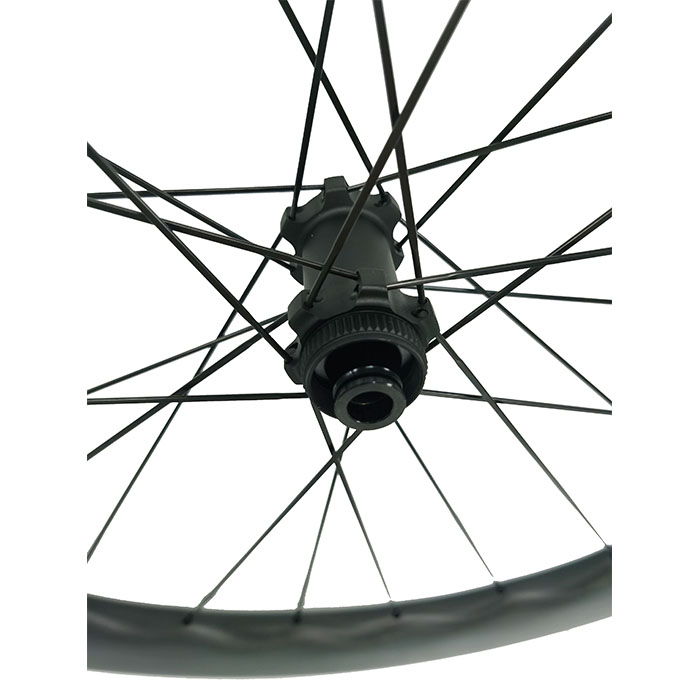
A carbon road wheel uses carbon fiber composite material as the primary structural material of the rim. Unlike aluminum, carbon fiber allows engineers to control the direction, density, and thickness of different reinforcement layers according to the loads experienced by the wheel.
That is important because a bicycle rim does not experience the same stress everywhere.
The spoke holes, rim bed, braking area, bead seat, and sidewalls all have different structural requirements. With a properly engineered carbon layup, material can be concentrated where strength and stiffness are needed while unnecessary material can be reduced elsewhere.
This is one reason a well-designed carbon road wheel can achieve a strong strength-to-weight ratio.
But there is another important point:
Not every carbon wheel is automatically fast.
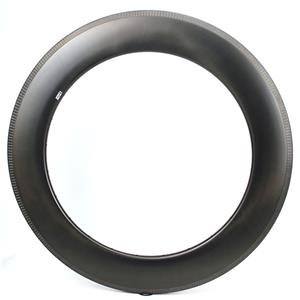
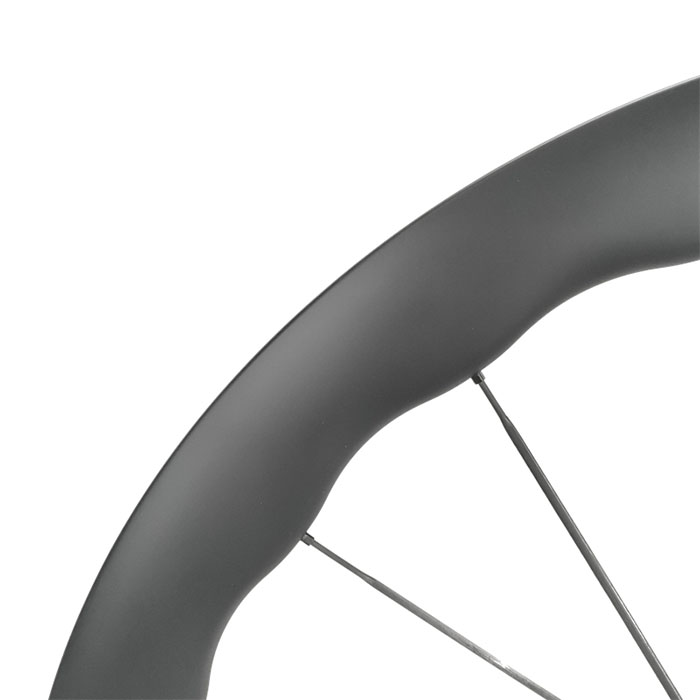
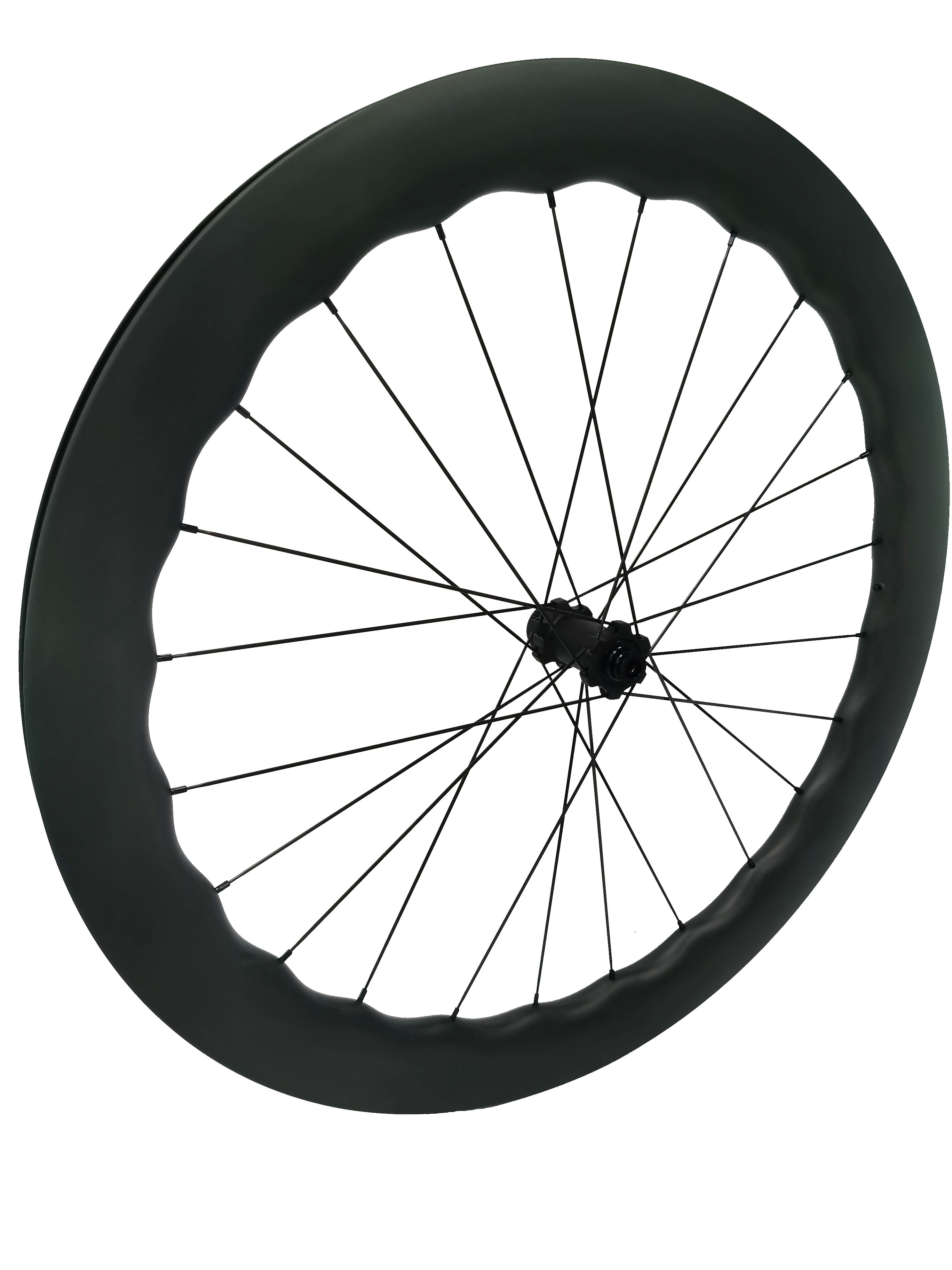
A shallow, heavy carbon rim may provide little aerodynamic advantage over a well-designed aluminum wheel. Conversely, a properly engineered 45–60 mm carbon rim can significantly change the aerodynamic characteristics of a road bike.
Therefore, when evaluating carbon wheels, buyers should look beyond the word “carbon.”
2. Where Do Carbon Wheels Actually Make a Difference?
Aerodynamics: The Biggest Advantage at Higher Speeds
For many road cyclists, aerodynamics is the most meaningful reason to upgrade.
As riding speed increases, aerodynamic drag becomes increasingly important. On flat roads and rolling terrain, a rider can spend a substantial portion of their power simply overcoming air resistance.
This is where deeper carbon rims become useful.
Compared with a conventional shallow aluminum rim, a 45–60 mm carbon rim can create a more aerodynamically efficient wheel profile.
For riders maintaining approximately 30–45 km/h, aerodynamic efficiency can become more important than saving a few hundred grams.
This is particularly relevant for:
Road racing
Time trials
Triathlon
Fast group rides
Breakaways
Flat and rolling courses
For these applications, a carbon aero wheel can make a noticeable difference even when the rider's total bike weight changes only slightly.
3. Weight: Useful, But Not the Whole Story
Weight is probably the first specification riders look at.
A lightweight carbon wheelset can reduce overall bicycle weight and, more importantly, reduce rotational mass.
This can improve the feeling of:
Acceleration
Climbing
Sprinting
Changes of pace
However, there is an important trade-off.
A very deep aerodynamic wheel may be slightly heavier than an ultra-light climbing wheel. Yet on flat roads, the aerodynamic benefit can outweigh the additional mass.
This creates a common misunderstanding:
The lightest wheel is not necessarily the fastest wheel.
For a rider who spends most of the day climbing at low speeds, lightweight wheels may make more sense. For a rider averaging 35–40 km/h on relatively flat terrain, aerodynamic wheels may deliver greater real-world benefits.
4. Carbon Wheels for Different Riding Scenarios
There is no universal “best” carbon wheel.
The correct choice depends on where and how you ride.
Climbing
For steep mountain roads, a 30–40 mm lightweight wheelset is often a sensible choice.
Priority:
Low weight + responsive acceleration + reliable stiffness
All-Round Road Riding
For riders who combine flat roads, rolling terrain, and moderate climbs, 45–55 mm wheels are often an excellent compromise.
They offer:
Good aerodynamic performance
Reasonable weight
Practical crosswind behavior
Versatility
This category is particularly attractive to amateur racers and performance-oriented recreational riders.
Aero Racing
For high-speed racing, deeper profiles such as 55–65 mm can offer greater aerodynamic advantages.
Priority:
Aerodynamics + stiffness + high-speed stability
Triathlon and Time Trial
Aerodynamics becomes even more important in triathlon and TT applications because riders often maintain relatively consistent speeds for long periods.
Deep-section carbon wheels are therefore widely used in these disciplines.
5. Technical Parameters: What Should You Compare?
When purchasing a carbon road wheel, don't compare only the advertised weight.
The following parameters deserve attention.
| Parameter | Typical Performance Range | Why It Matters |
|---|---|---|
| Wheel Size | 700C | Standard road-bike platform |
| Rim Depth | 30–65 mm | Influences aerodynamics and weight |
| Internal Width | Approx. 19–25 mm | Affects tire profile and compatibility |
| Rim Material | Carbon composite | Determines structural performance |
| Wheel Type | Clincher / Tubeless Ready | Influences tire system |
| Spoke Count | Approx. 20–28 | Balance between weight and durability |
| Rim Weight | Model dependent | Affects acceleration and total weight |
| Wheelset Weight | Approx. 1,200–1,600 g | Important for climbing and responsiveness |
| Testing | ISO 4210 | Structural and safety reference |
| Hub Options | Various | Influences rolling performance and compatibility |
Specifications vary according to rim profile, layup, hub, spoke configuration, and intended application.
6. Rim Depth: 35mm, 45mm, 55mm or 65mm?
This is one of the most important decisions when buying carbon wheels.
35–40 mm
Best suited to:
Climbers
Mountainous routes
Riders prioritizing low weight
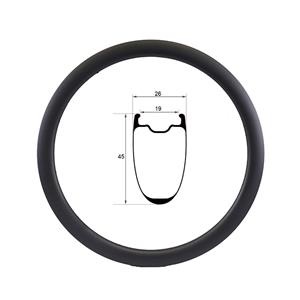
45–50 mm
A strong all-round option.
Suitable for:
Road racing
Endurance riding
Rolling terrain
Daily performance riding
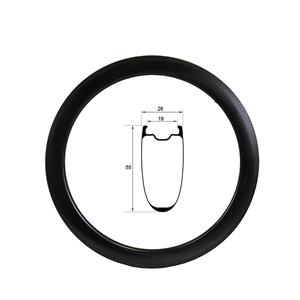
55 mm
A popular balance between aerodynamic efficiency and practical handling.
Suitable for:
Racing
Fast group riding
Flat and rolling roads
Performance-oriented road bikes
60–65 mm+
Designed primarily for aerodynamic performance.
Best suited to:
Time trials
Triathlon
Flat racing
High-speed riding
The deeper the rim, however, the more important crosswind behavior becomes. A good wheel manufacturer therefore needs to consider the entire rim-and-tire aerodynamic system rather than simply making the rim deeper.
7. Does Carbon Improve Ride Quality?
This question is more complicated than it first appears.
Carbon fiber itself does not automatically guarantee a more comfortable ride.
The final ride quality depends on:
Carbon layup
Rim stiffness
Tire pressure
Tire width
Rim width
Spoke tension
Frame geometry
A properly engineered carbon wheel can be designed to balance lateral stiffness with controlled vertical compliance.
This can provide a combination of:
Efficient power transfer + predictable handling + reasonable vibration absorption.
That is one reason carbon wheel design requires much more engineering than simply reducing rim weight.
8. Carbon Layup: The Part Riders Usually Cannot See
Two carbon rims can look almost identical from the outside while performing differently on the road.
The difference may be hidden inside the rim.
Manufacturers can adjust:
Fiber orientation
Number of layers
Local reinforcement
Resin distribution
Rim wall thickness
Spoke-hole reinforcement
For example, the spoke-hole area requires additional structural consideration because spoke tension transfers load directly into the rim.
At Xiamen Trips Sporting Goods Co.,Ltd, carbon fiber R&D and production are integrated within the manufacturing process, allowing the company to control product development from material selection and layup design through molding, finishing, testing, and wheel assembly.
9. Spokes and Wheel Assembly Matter Too
A carbon rim cannot perform properly if the wheel is poorly assembled.
Spoke tension has a direct influence on:
Wheel stiffness
Lateral stability
Durability
Long-term trueness
This is why professional wheel building remains important.
At Xiamen Trips Sporting Goods Co.,Ltd, wheelsets are hand-built and trued by experienced mechanics. The objective is not simply to produce a wheel that looks straight when it leaves the factory, but to establish consistent spoke tension and reliable wheel behavior.
For OEM customers, this becomes particularly important because consistency must be maintained from the first sample to repeated production orders.
10. Data-Supported Evidence: Where the Performance Difference Comes From
It is easy to say that carbon wheels are “faster,” but a useful technical comparison should explain why.
Consider two hypothetical road wheelsets:
| Performance Factor | Shallow Aluminum Wheel | 55mm Carbon Aero Wheel |
|---|---|---|
| Rim Depth | 25 mm | 55 mm |
| Approx. Wheelset Weight | 1,700–1,900 g | 1,300–1,600 g |
| Aero Potential | Low–moderate | High |
| Climbing Response | Good | Good |
| Flat-Road Performance | Moderate | Strong |
| High-Speed Efficiency | Moderate | Strong |
| Racing Suitability | Moderate | High |
These figures are representative ranges rather than universal specifications. Actual performance depends on tire selection, rider position, yaw angle, wind conditions, wheel geometry, and wheel weight.
The important takeaway is that carbon's advantage comes from the entire engineering package—not simply the material itself.
11. When Carbon Wheels May NOT Be the Best Choice
A manufacturer should also be honest about the limitations.
Carbon wheels may not be the most economical choice for:
Urban Commuting
If the bicycle is primarily used for short city trips, a quality aluminum wheel may provide sufficient performance.
Heavy Utility Riding
Frequent curb impacts, rough roads, and heavy loads may make durability and repairability more important than aerodynamic performance.
Very Tight Budgets
For riders purchasing their first road bike, spending the entire upgrade budget on carbon wheels may not produce the greatest overall improvement.
Sometimes tires, bike fit, or drivetrain maintenance can provide a better return.
12. Purchasing Guide: How Should You Choose a Carbon Wheel Manufacturer?
If you are an individual rider, distributor, bicycle brand, or OEM customer, don't evaluate suppliers based only on the lowest quotation.
Consider these questions.
1. What Is the Factory's Manufacturing Capability?
Ask about:
Production area
Engineering team
Monthly capacity
Carbon processing technology
Wheel assembly capability
2. What Testing Is Performed?
A serious manufacturer should be able to explain its testing procedures and applicable standards.
Xiamen Trips Sporting Goods Co.,Ltd rigorously tests its carbon rims according to ISO4210 standards.
3. Can the Supplier Provide OEM Customization?
For brands, important options may include:
Rim depth
Rim width
Carbon layup
Logo
Paint
Spoke configuration
Hub options
Packaging
A flexible factory can help a brand develop a differentiated product rather than simply selling an existing catalog model.
4. What Happens After Delivery?
Ask about:
Warranty
Replacement components
Technical support
Quality claims
Spare parts
Shipping damage procedures
A reliable supplier should have a clear process for handling after-sales issues.
13. Why Work with Xiamen Trips Sporting Goods Co.,Ltd?
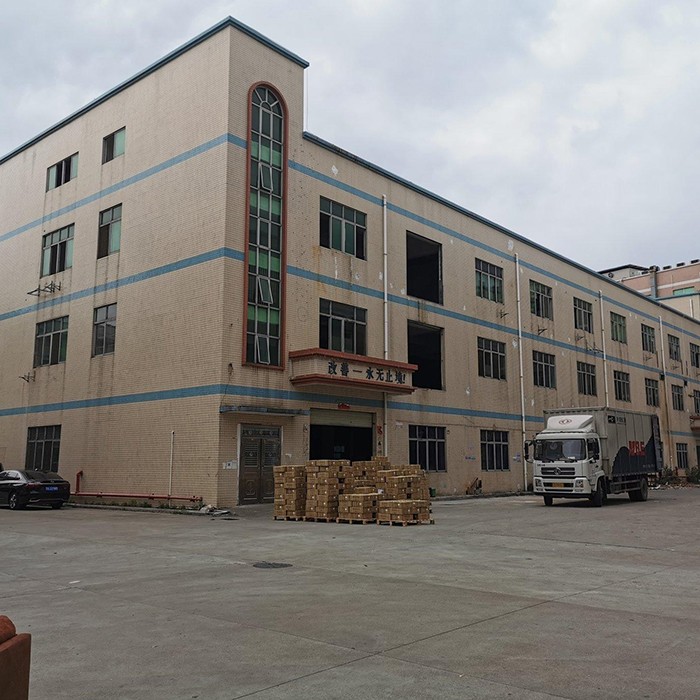
Founded in 2017, Xiamen Trips Sporting Goods Co.,Ltd is an integrated technology and manufacturing enterprise specializing in carbon fiber and composite materials.
The company combines:
R&D
Product design
Carbon manufacturing
Wheel production
Sales
Global service
Its production facility covers approximately 2,000㎡, with more than 50 employees, including 6 engineers and 40+ trained production workers.
Current production capability includes approximately:
3,000 carbon bicycle rims per month
500 wheelsets per month
This capacity allows Trips to support both developing cycling brands and established international customers.
The company's carbon products are exported to markets including Europe, the United States, Thailand, Japan, and Korea, with long-term cooperation established with international customers.
14. From Performance Requirement to Finished Wheel: The Trips Conversion Path
Choosing a wheel should start with the riding requirement—not with a product photograph.
At Xiamen Trips Sporting Goods Co.,Ltd, the development process can be approached in several stages:
Step 1 — Define the Application
Road racing? Climbing? Endurance? Triathlon? OEM bicycle assembly?
Step 2 — Select the Wheel Architecture
Choose the appropriate:
Rim depth
Internal width
Tire system
Spoke count
Hub configuration
Step 3 — Confirm Technical Requirements
Define:
Weight target
Aerodynamic objective
Rider weight range
Intended tire size
Testing requirements
Step 4 — Sample Development
The factory develops samples for evaluation and technical confirmation.
Step 5 — Testing and Optimization
Performance, structural integrity, dimensions, and assembly quality are reviewed before mass production.
Step 6 — Mass Production
Once specifications are approved, standardized manufacturing processes ensure repeatability across production batches.
Step 7 — Global Delivery
Trips supports international customers with export experience and production coordination.
FAQ: Do Carbon Wheels Really Make a Difference?
Q1. Will carbon wheels make my road bike faster?
They can. The biggest potential gains generally come from aerodynamic optimization and weight reduction, particularly when compared with basic shallow aluminum wheels.
Q2. Are deeper wheels always faster?
Not necessarily. Rim depth must be matched to rider speed, terrain, wind conditions, and tire configuration.
Q3. Are carbon wheels better for climbing?
Lightweight carbon wheels can be advantageous for climbing, but ultra-deep aero wheels are not necessarily the best choice for steep mountain routes.
Q4. How much weight can I save?
The exact amount depends on the original wheelset and the carbon model. Many performance carbon wheelsets fall within approximately the 1,200–1,600 g range, but product specifications vary.
Q5. Are carbon wheels suitable for everyday riding?
Yes, provided the wheel is properly designed for the intended application and meets appropriate testing requirements.
Q6. What is more important: weight or aerodynamics?
It depends on the ride. On steep climbs, weight becomes more significant. At higher speeds on flat or rolling terrain, aerodynamics can become the larger performance factor.
Conclusion: Carbon Wheels Can Make a Difference—If You Choose the Right One
So, do carbon wheels make a difference on a road bike?
The answer is yes—but not simply because carbon is lighter or more expensive.
The real difference comes from the combination of:
carbon material + structural layup + rim profile + aerodynamics + wheel weight + spokes + tire compatibility + manufacturing quality.
For a climber, the priority may be a lightweight 30–40 mm wheelset.
For an all-round road cyclist, 45–55 mm may offer the best compromise.
For a racer, triathlete, or time-trial specialist, deeper aerodynamic profiles can make more sense.
The key is to stop asking, “What is the lightest carbon wheel?” and start asking, “What wheel is fastest and most suitable for the way I actually ride?”
With integrated carbon fiber R&D, manufacturing experience, ISO4210 testing, experienced wheel assembly, and international supply capabilities, Xiamen Trips Sporting Goods Co.,Ltd provides carbon wheel solutions for riders, bicycle brands, distributors, and OEM customers looking to turn specific performance requirements into reliable finished products.
Choose the riding goal first. Choose the wheel second. That is where the real performance difference begins.